
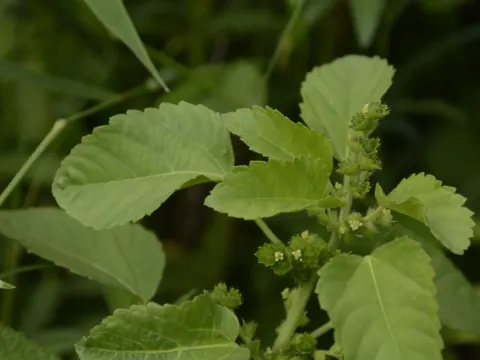
Acalypha malabarica
Acalypha malabarica
Acalypha malabarica is a member of the Euphorbiaceae family, widely recognized in tropical botanical studies for its distribution across South and Southeast Asia. As an annual herbaceous plant, it frequently thrives in disturbed landscapes and agricultural fields within its natural habitat.
What the section contains
Acalypha malabarica
Optimal growth of Acalypha malabarica requires warm tropical climates with high humidity levels throughout the growing season. The plant demonstrates significant plasticity in soil preferences but shows the best development in well-drained, sandy loam soils that prevent waterlogging and facilitate root respiration.
The botanical structure of this species features a branched stem with simple, petiolate leaves that often have serrated margins. The inflorescences are small and catkin-like, which is a signature characteristic of the genus Acalypha, distinguishing it from other meadow herbs in the region.
Agricultural management of this crop involves proper spacing to ensure adequate airflow and sunlight penetration. While not cultivated on an industrial scale, when managed for medicinal purposes, standard agronomic practices such as light fertilization and weed suppression are highly effective.
The economic value of Acalypha malabarica is concentrated in its medicinal properties. Traditional practitioners utilize the plant for its bioactive compounds, which are studied for their potential applications in antimicrobial and antioxidant treatments, highlighting the plant's importance in ethnobotany.
The primary threats to the cultivation of this species involve fungal pathogens that thrive in high-humidity conditions. Leaf spots and root rot are the most common issues that can lead to significant yield losses if moisture management is not strictly maintained during the rainy season.
Pest management focuses largely on mitigating aphid infestations and spider mites. These pests not only damage the leaf tissues but also serve as potential vectors for plant viruses, requiring the agronomist to implement integrated pest management strategies to protect the crop integrity.