
Acalypha hispida
Acalypha hispida
Acalypha hispida, commonly known as the Chenille plant or Red Hot Cat's Tail, is a member of the Euphorbiaceae family. This species originates from the tropical regions of the South Pacific and Indonesia, where it thrives in warm, humid forest environments.
What the section contains
Acalypha hispida
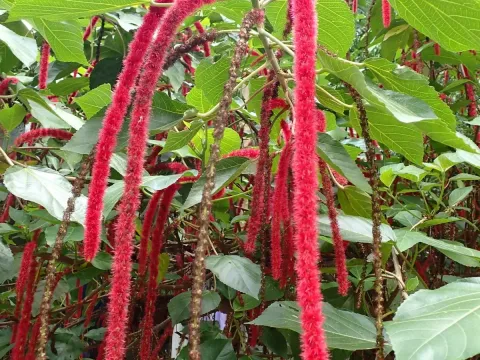
The plant is recognized for its distinctive botanical features, particularly its long, drooping catkin-like flowers that are covered in fine red hairs. These inflorescences can reach significant lengths, providing a striking visual appeal that makes the plant highly valued in ornamental settings.
To cultivate Acalypha hispida effectively, one must ensure a temperature range of 20°C to 28°C and protection from cold drafts. As a tropical crop, it requires high humidity levels to prevent the drying of leaf tips and to encourage continuous blooming throughout the year.
The soil requirements for this shrub are specific: it thrives in a well-draining, fertile, and slightly acidic medium. Growers typically use a mixture of potting soil, perlite, and peat to prevent the risk of waterlogging, which the plant is highly susceptible to.
Beyond its aesthetic use in gardens and greenhouses, Acalypha hispida serves as a model plant for studying growth responses in tropical ornamental species. Its horticultural management involves regular pruning to maintain a compact shape and frequent re-potting as the root system expands.
The primary pests affecting Acalypha hispida include mealybugs, spider mites, and aphids. These insects tend to colonize the undersides of the leaves, necessitating frequent inspections and the application of horticultural oils or systemic insecticides to protect the plant.
Pathogenic threats include various root rot fungi, which are often the result of excessive soil moisture and poor drainage. Additionally, fungal leaf spots can develop if the environment lacks sufficient airflow and remains overly damp for extended periods.