
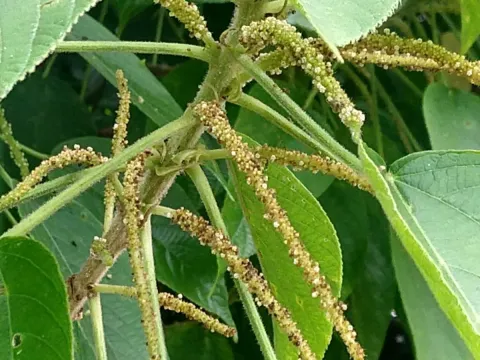
Acalypha macrostachya
Acalypha macrostachya
Acalypha macrostachya is a striking evergreen shrub belonging to the Euphorbiaceae family. Native to the tropical regions of Central and South America, it is widely recognized for its long, pendulous inflorescences and large, textured foliage.
What the section contains
Acalypha macrostachya
The plant thrives in warm, humid tropical environments, requiring temperatures between 20°C and 28°C. It is highly sensitive to cold weather and must be kept in greenhouse conditions or as an indoor plant in non-tropical climates.
Light requirements are significant for this species; it prefers bright, filtered sunlight. Direct exposure to intense sun can scorch the leaves, while insufficient light leads to sparse foliage and limited production of its characteristic catkin-like flowers.
A well-draining, nutrient-rich potting mix is essential for the health of Acalypha macrostachya. A blend consisting of peat moss, leaf compost, and coarse sand or perlite ensures the root system receives both moisture and adequate oxygenation.
Consistent humidity is vital, as the plant originates from rainforest habitats. Regular misting, the use of humidity trays, or placement in a climate-controlled conservatory helps maintain the lush appearance of the foliage throughout the year.
The most common pests affecting Acalypha macrostachya are spider mites, which thrive in environments where the air is too dry. Infestations typically appear as fine webbing and stippling on the undersides of the leaves.
Mealybugs and aphids can also settle on the plant, particularly in sheltered areas where growth is dense. Early detection through regular inspections is the most effective management strategy for these invasive insects.
Root rot is a major threat caused by overwatering or poor drainage. When soil remains waterlogged, the roots suffocate and decay, leading to yellowing leaves and systemic wilting of the shrub.
Fungal leaf spot diseases may develop if the foliage remains wet for extended periods in low-airflow conditions. Ensuring good ventilation and keeping leaves dry during watering can significantly mitigate these risks.
To keep the plant healthy, implement a proactive pest management program. Utilize organic insecticidal soaps if an infestation occurs, and ensure that any new plant brought into the greenhouse is quarantined to prevent the spread of diseases.