
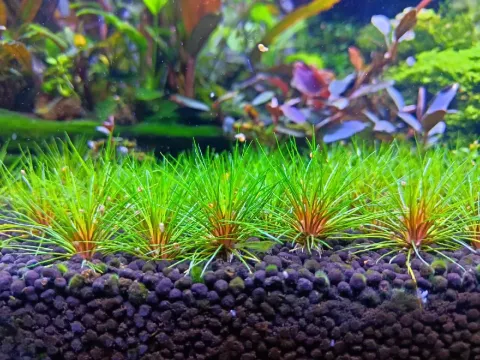
Eriocaulon capillus-naiadas
Eriocaulon capillus-naiadas
Eriocaulon capillus-naiadas belongs to the Eriocaulaceae family and is highly regarded by aquarium hobbyists for its delicate, needle-like leaf structure. Originating from the tropical regions of Asia, it is adapted to soft, nutrient-rich environments.
What the section contains
Eriocaulon capillus-naiadas
The primary requirement for this species is extremely soft water with low carbonate hardness (kH). High mineral content can severely inhibit the plant's growth and lead to the rapid decline of its delicate rosette structure.
Intensive lighting is essential for photosynthesis and sustaining the plant's growth cycle. Without a high-intensity full-spectrum light source, the plant will fail to thrive and will eventually show signs of stunted growth.
A specialized, nutrient-dense aquatic substrate is required to support the root development of this species. The substrate must be slightly acidic to facilitate nutrient uptake, which the plant primarily performs through its root system.
Stable environmental conditions are mandatory. Consistent CO2 injection combined with controlled weekly water changes helps maintain the delicate balance of ions in the water column required by this sensitive aquatic plant.
Algae infestations represent the most significant threat to the survival of the plant. Because the leaves are thin and fragile, algae can easily cover the surface, depriving the plant of light and preventing gas exchange.
Nutrient deficiencies, particularly involving iron and magnesium, frequently lead to chlorosis. This condition causes the leaves to lose their vibrant green color and can eventually cause the plant to stop developing new foliage.
Bacterial infections often occur if the plant is stressed by frequent repositioning or unstable water parameters. These infections typically manifest as softening of the base, leading to rapid decay of the entire rosette.
Poor substrate aeration can cause anaerobic conditions that harm the roots. Using a fine-grain substrate that allows for subtle water circulation is a recommended agrotechnical practice to avoid root asphyxiation.
Invasive fauna, including certain snail species, may graze on the soft foliage of the Eriocaulon. Monitoring the aquarium environment to ensure a healthy balance between the plant and its inhabitants is crucial for successful cultivation.