
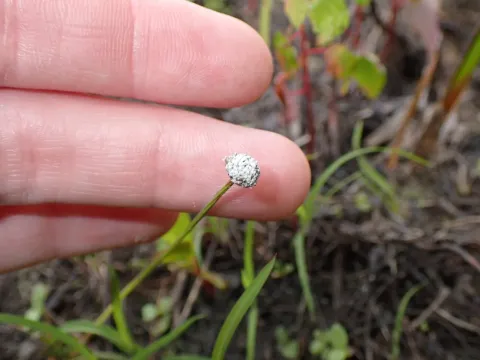
Eriocaulon aquaticum
Eriocaulon aquaticum
Eriocaulon aquaticum, commonly known as pipewort, belongs to the Eriocaulaceae family. Native to the wetlands and lake shores of North America, it is a specialized aquatic plant that thrives in soft, acidic freshwater environments.
What the section contains
Eriocaulon aquaticum
The plant exhibits a distinct morphological structure characterized by a compact rosette of stiff, needle-like leaves. These leaves emerge from a central base, creating a radial symmetry that is highly sought after by aquarists for foreground planting.
Successful cultivation depends heavily on water parameters. It requires very soft water with a low general hardness (GH) and carbonate hardness (KH), coupled with a slightly acidic pH level between 5.5 and 6.5 to mimic its natural native habitats.
The substrate must be nutrient-rich yet sufficiently porous. Using specialized, fine-grained aquarium soils is highly recommended to allow the plant's delicate root system to access minerals while preventing the buildup of anaerobic pockets.
Light intensity is paramount for the health of Eriocaulon aquaticum. High-output lighting systems are essential to maintain the tight, compact structure of the rosette; otherwise, the plant will become leggy and lose its visual appeal.
The most significant threat to this culture is the rapid overgrowth of algae, such as filamentous green algae, which compete for light and nutrients and can smother the slow-growing rosettes.
Micronutrient deficiencies are common, especially regarding iron and trace minerals. These shortages typically manifest as leaf chlorosis, causing the green tissue to fade and the plant to weaken.
High water temperatures are detrimental to the species. Maintaining stable temperatures in the lower tropical range (20–24°C) is crucial, as excessive heat leads to metabolic stress and rapid decay.
Excessive water hardness is a major environmental stressor. High levels of calcium and magnesium carbonate interfere with nutrient uptake, often leading to stunted growth or the eventual melting of leaves.
Bacterial or fungal pathogens can attack the root crown if the substrate becomes compacted or stagnant. Proper water circulation and substrate maintenance are vital to avoid these systemic issues.