
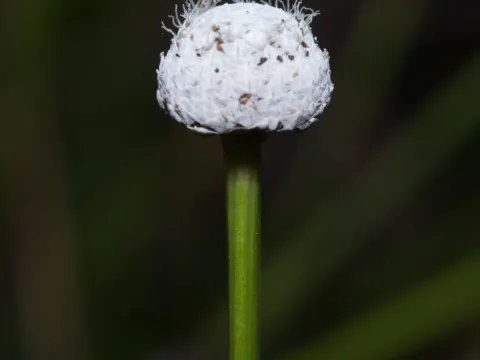
Eriocaulon australe
Eriocaulon australe
Eriocaulon australe is a specialized herbaceous plant belonging to the Eriocaulaceae family. This species originates from tropical wetlands and riparian areas, primarily found in parts of Australia and Asia, where it thrives in saturated, nutrient-rich soils.
What the section contains
Eriocaulon australe
The plant is characterized by a dense rosette of rigid, linear, needle-like leaves emerging from a central crown. During its reproductive phase, it produces long stalks topped with distinct, button-like inflorescences that are highly valued by hobbyists and botanists alike.
Cultivation of this species requires strict adherence to environmental parameters. It thrives in soft, acidic water conditions, typically requiring a pH range between 5.5 and 6.5, which mimics its natural swampy habitat and promotes healthy physiological development.
High-intensity light is a fundamental requirement for the healthy growth of Eriocaulon australe. Without sufficient photon flux, the plant will lose its compact habit, resulting in elongated leaves and a significant reduction in its overall health and aesthetic quality.
Soil quality is paramount for this culture. The substrate must be nutrient-dense, providing essential micronutrients, yet sufficiently porous to allow for root respiration. Compacted or anaerobic soils are unsuitable and can lead to rapid root decay.
The primary threat to the stability of Eriocaulon australe is the fluctuation of environmental parameters. Sudden changes in water chemistry or temperature often trigger metabolic stress, leading to the deterioration of the leaf rosette.
Root rot, often caused by pathogenic fungi or improper substrate aeration, is a common issue that occurs when the plant is kept in stagnant or excessively dense growth mediums.
Algal blooms pose a significant threat to the plant's survival. When filamentous or epiphytic algae cover the foliage, the plant loses its ability to photosynthesize effectively, leading to starvation and eventual death.
Nutrient imbalances, particularly deficiencies in iron or trace elements, frequently manifest as severe chlorosis. If left uncorrected, the plant's growth will stunt, and the central crown may collapse.
Mechanical damage from herbivores or improper maintenance practices provides entry points for opportunistic bacteria, which can rapidly spread through the delicate vascular tissue of the plant.