
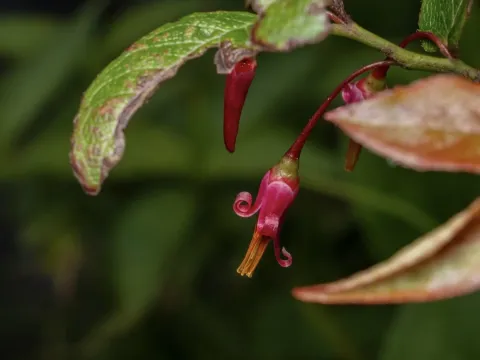
Southern mountain cranberry
Vaccinium erythrocarpum
Vaccinium erythrocarpum, commonly known as the southern mountain cranberry or bearberry, is a deciduous shrub belonging to the Ericaceae family. It is native to the higher elevations of the southern Appalachian Mountains in the United States, thriving in cool, moist, and high-altitude habitats.
What the section contains
Southern mountain cranberry
The plant requires acidic soil conditions, ideally with a pH level between 4.5 and 5.5, which is typical for soils rich in organic matter. Gardeners must mimic these natural conditions by incorporating peat moss or pine needles to ensure the substrate remains sufficiently acidic for healthy root development.
Climate-wise, this species prefers cool to moderate temperatures and high humidity levels. It performs best in partial shade, as the harsh midday sun in lower altitudes can scorch the leaves and dehydrate the plant quickly. Proper site selection is crucial for the survival of the shrub in non-native environments.
Agrotechnical maintenance includes consistent moisture management. While the plant requires regular watering, it is intolerant of waterlogged soil conditions. Mulching the area around the base of the shrub is essential to retain soil moisture, suppress weeds, and maintain the necessary temperature balance for the roots.
The berries are used for culinary purposes, often processed into jams, jellies, or consumed fresh due to their distinct acidic flavor. Because of its specific ecological requirements, it remains a specialty crop primarily for enthusiasts and niche markets rather than large-scale commercial agriculture.
Like many members of the blueberry family, Vaccinium erythrocarpum is generally hardy but can be susceptible to fungal diseases such as powdery mildew and leaf spot when airflow is restricted. Proper spacing between shrubs is essential to ensure adequate ventilation and reduce disease pressure.
Pests such as aphids, spider mites, and leaf-eating caterpillars can occasionally cause damage to the foliage. In damp conditions, slugs and snails may target new growth, potentially weakening the shrub if not managed through physical barriers or biological control methods.
Disease management focuses on preventive measures, including regular pruning of dead or diseased wood. Sanitation is key; all infected plant material should be removed from the site and destroyed to prevent the spores from spreading to healthy parts of the plant during the following season.
Chemical intervention should be kept to a minimum to protect local pollinators and maintain the organic quality of the fruit. Integrated Pest Management (IPM) strategies, which prioritize monitoring and natural enemies, are highly recommended for smaller plots or home gardens.
Maintaining a healthy plant through proper fertilization—using fertilizers designed specifically for acid-loving ericaceous plants—strengthens the shrub's natural resistance. A robust plant is far less likely to succumb to pest outbreaks compared to one suffering from nutritional or environmental stress.