
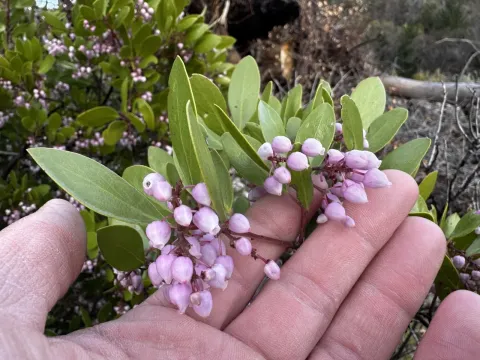
Stanford manzanita
Arctostaphylos stanfordiana
Stanford manzanita (Arctostaphylos stanfordiana) is a distinctive evergreen shrub belonging to the Ericaceae family, native to the diverse landscapes of California.
What the section contains
Stanford manzanita
This species thrives in well-drained, rocky or sandy soils that mimic its natural habitat, emphasizing the need for exceptional drainage to maintain root health.
Cultivation requires full sun exposure to promote vigorous growth and the development of the plant's characteristic smooth, reddish bark and vibrant pink flowers.
The plant is highly adapted to Mediterranean-style climates, displaying significant drought tolerance once established in the landscape.
In ornamental horticulture, it is prized for its year-round foliage and is often used in xeriscaping projects where water conservation is a primary priority.
Pathogens such as Phytophthora are the primary concern for Stanford manzanita, particularly when irrigation practices lead to prolonged soil moisture saturation.
Pests like aphids and scale insects may occasionally infest the plants, particularly if they are stressed by environmental factors or poor placement.
Proper spacing is crucial to prevent the spread of foliar diseases, as stagnant air can create a microclimate conducive to fungal development.
Root rot is often a silent threat; therefore, monitoring soil moisture levels is critical to ensuring the long-term survival of the shrub in a garden setting.
Integrated pest management strategies focusing on cultural practices, such as proper pruning and irrigation management, are recommended over chemical controls.