
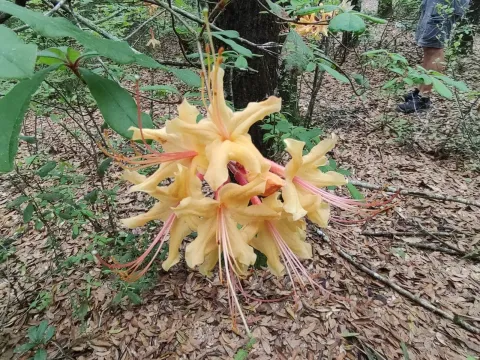
Southern azalea
Rhododendron austrinum
Propagating the Southern azalea from seed requires a period of cold stratification for 1–2 months at roughly 4°C. The ideal time for sowing is early spring in a greenhouse or controlled indoor environment.
What the section contains
Southern azalea
Seeds should be surface-sown on a moist, acidic substrate such as a peat and sand mix. Since the seeds are extremely tiny, they should not be buried under a thick layer of soil, but rather pressed gently.
Maintaining high humidity and a consistent temperature of 18–22°C is critical for successful germination. A clear cover or misting system helps create the necessary microclimate for the seedlings.
Germination typically occurs within a few weeks. It is vital to provide bright, indirect light to the young sprouts while ensuring they do not dry out, as they are very sensitive in their first stages of development.
Pricking out the seedlings into individual containers is best done once they establish their first set of true leaves. Transitioning to outdoor conditions should only happen once the plants have become robust enough to handle environmental stress.
As a member of the Ericaceae family, the Southern azalea strictly requires acidic soil conditions with a pH range of 4.5 to 5.5. This chemical balance is essential for the plant to absorb nutrients efficiently.
The species performs best in partial shade, as it is native to woodland environments. Exposure to intense afternoon sun can scorch the leaves and significantly stress the root system, which is shallow and sensitive.
Proper soil structure is paramount; it must be loose, well-draining, and rich in organic matter. Amending the soil with pine bark or coniferous compost helps maintain the necessary acidity and prevents waterlogging.
Irrigation should be consistent, especially during the peak growing season, to prevent drought stress. Using rainwater or softened water is recommended to avoid altering the pH balance of the soil.
- Apply a thick layer of pine needle mulch to maintain moisture.
- Avoid lime or alkaline fertilizers at all costs.
- Provide protection against harsh, drying winter winds in colder regions.
The azalea lace bug is a common pest that feeds on the undersides of leaves, causing a stippled, yellowed appearance. Regular monitoring and timely application of horticultural oils or insecticides are recommended.
Root rot caused by Phytophthora species is a serious threat in poorly drained or waterlogged soils. Ensuring excellent drainage and avoiding overwatering are the best defenses against this pathogen.
Powdery mildew may occur if air circulation is insufficient, leading to a white, fuzzy coating on the foliage. Pruning to improve airflow and using appropriate fungicides can mitigate this issue.
Scale insects can occasionally infest stems and branches, weakening the plant. Physical removal or specialized systemic treatments are effective if detected before the infestation becomes severe.
Iron chlorosis is a common physiological condition caused by inadequate iron uptake, usually linked to high soil pH. Adjusting the soil chemistry is the primary method for correcting the yellowing of leaves.