
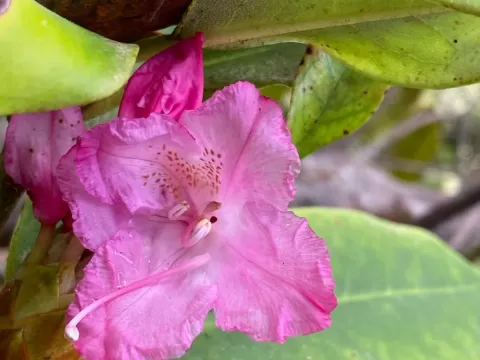
Rhododendron macrophyllum
Rhododendron macrophyllum
Rhododendron macrophyllum, commonly known as the Pacific rhododendron, is a prominent member of the Ericaceae family. It is an evergreen shrub native to the Pacific Northwest of North America, typically found in conifer forests and mountainous regions.
What the section contains
Rhododendron macrophyllum
The plant requires acidic soil conditions with a pH level ranging from 4.5 to 5.5. Success in cultivation depends heavily on soil drainage, as the fine root system is highly susceptible to root rot in saturated, poorly aerated soil environments.
Cultivation sites should be chosen to provide filtered sunlight or partial shade. Exposure to intense direct sun, especially in hot afternoons, can cause leaf scorch and heat stress, significantly reducing the vigor and aesthetic value of the shrub.
Water requirements include consistent soil moisture throughout the growing season. It is vital to use soft or rainwater, as the species is intolerant of alkaline salts or chlorine, which can alter soil pH and lead to mineral deficiencies in the foliage.
Management practices include mulching with organic materials such as pine needles or acidic peat moss to maintain humidity, suppress weeds, and provide a slow release of nutrients as the mulch decomposes around the base of the plant.
Fungal diseases are the primary threat to the Pacific rhododendron, with Phytophthora root rot being the most lethal. It thrives in high-moisture environments and can decimate a specimen if soil drainage is compromised or if the plant is overwatered.
The rhododendron lace bug is a common pest that targets the underside of the leaves. Feeding damage results in yellow stippling on the upper leaf surface, which can cause premature leaf drop and weaken the plant if left untreated.
Spider mites can also cause significant damage during hot and dry spells. These pests colonize the leaves, leading to chlorosis and general plant decline, which necessitates the use of miticides or increased air humidity to control populations.
Leaf spot pathogens can occur, particularly during seasons with excessive rainfall. These fungi thrive on wet foliage and can cause aesthetic damage. Maintaining good air circulation and removing fallen leaves helps minimize the spread of spores.
Integrated pest management is recommended to preserve the plant's health. This includes regular monitoring of foliage, proper sanitation by removing infected plant debris, and selective use of fungicides only when strictly necessary.