
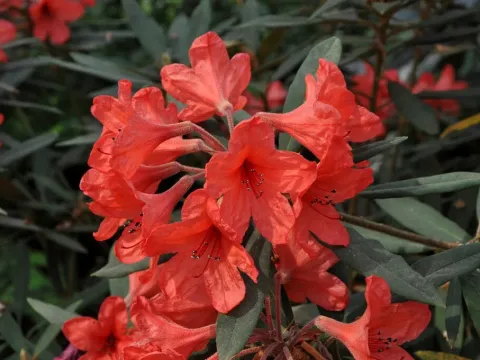
Rhododendron griersonianum
Rhododendron griersonianum
Rhododendron griersonianum is a distinguished evergreen shrub belonging to the Ericaceae family, renowned for its brilliant scarlet-pink blooms. Native to the mountainous regions of Yunnan, China, and parts of Myanmar, it thrives in cool, humid, and misty environments at high altitudes.
What the section contains
Rhododendron griersonianum
For cultivation, this species requires a sheltered position in partial shade, as direct, intense sunlight can scorch its lanceolate, fuzzy-backed leaves. It is highly sensitive to wind and performs best in garden areas protected from strong drafts that can dry out the foliage prematurely.
The plant strictly requires acidic soil with a pH range between 4.5 and 5.5. The ideal planting substrate should be highly organic, porous, and well-draining, consisting of peat, leaf mold, and coniferous bark to prevent root suffocation.
Proper agronomic care involves maintaining consistent soil moisture levels throughout the growing season. Applying an organic mulch, such as pine needles or wood chips, around the base helps retain ground moisture and stabilizes soil temperatures for the shallow root system.
Fertilization should be handled with caution, using specifically formulated acidic fertilizers. Regular monitoring of the substrate pH is essential, as the plant cannot absorb necessary nutrients like iron if the soil becomes too alkaline, leading to rapid chlorosis.
Phytophthora root rot is the primary threat to this species, usually triggered by poor drainage or overwatering. The pathogen attacks the root system, causing the plant to wilt even when the soil appears moist, making it imperative to avoid waterlogged conditions.
The rhododendron lace bug is a common pest that sucks sap from the leaves, causing them to develop pale, mottled spots and lose their vitality. Management requires regular inspection and timely application of targeted systemic insecticides during the spring.
Spider mites represent a recurring problem, particularly during hot and dry spells. These pests proliferate rapidly, leaving fine webbing on the undersides of the leaves and causing them to turn bronze or yellow, requiring consistent humidity management and acaricide use.
Powdery mildew may occur if the planting site lacks adequate air circulation or during periods of prolonged humidity. This fungal infection creates a white, dusty layer on the foliage, which can be mitigated by improving spacing between plants and applying fungicides.
Botrytis blight often affects flower buds during cool, damp spring weather, causing them to rot before opening. Removing and destroying infected buds is a necessary step to prevent the further spread of fungal spores within the garden collection.