
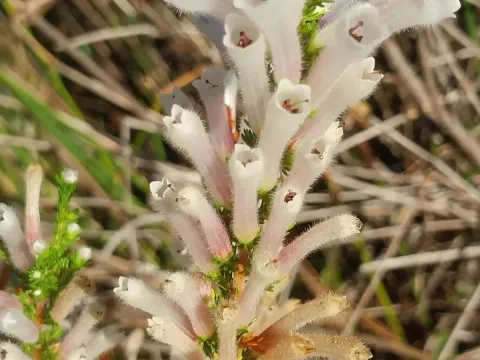
Erica perspicua
Erica perspicua
Erica perspicua, commonly known as the translucent heath, is a graceful evergreen shrub belonging to the Ericaceae family. Native to South Africa, it is widely appreciated in horticulture for its elegant, bell-shaped flowers and slender habit.
What the section contains
Erica perspicua
The plant is biologically adapted to nutrient-poor, well-draining soils. In its natural range, it thrives in sandy, rocky areas where the pH level remains consistently acidic, a critical factor for home gardeners to replicate.
Climate requirements for this species are specific. It prefers mild temperatures and requires high light intensity to maintain its compact growth form and to produce an abundance of seasonal blossoms.
Soil structure is paramount. To ensure success, the growing medium must contain plenty of peat moss or pine needles to sustain acidity. Avoid any soil mixes that contain lime or alkaline amendments, as these will lead to rapid chlorosis and plant decline.
Water management is the final pillar of cultivation. While the plant dislikes stagnant water, it also suffers during extended drought periods. Use only rainwater or demineralized water to keep the root zone consistently moist but never waterlogged.
Root rot, primarily caused by Phytophthora species, is the most lethal threat to Erica perspicua. It often occurs when the drainage system is inadequate, causing the root system to suffocate in dense, wet soil.
Foliar pests such as spider mites represent a common concern in warmer and drier environments. They thrive on the undersides of the needle-like leaves, causing them to discolour and eventually drop off if not managed early.
Scale insects can also infest the stems of the plant. These pests are notoriously difficult to control once established, as their protective shells make them resistant to many contact insecticides.
- Maintain high air circulation around the canopy to prevent fungal growth.
- Apply preventative fungicides specifically formulated for Ericaceous plants.
- Remove any dead or diseased branches immediately to reduce the risk of further infection.
Overall, maintaining the plant's health requires regular monitoring for early signs of stress. By mimicking the natural South African conditions and ensuring perfect drainage, growers can effectively mitigate most biological threats.