
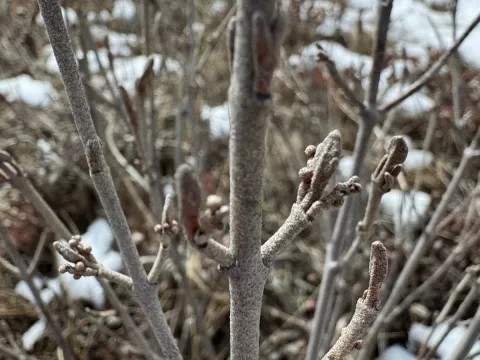
Shepherdia canadensis
Shepherdia canadensis
Propagation of Shepherdia canadensis is typically achieved through seeds or vegetative methods, such as utilizing root suckers. Seeds require a period of cold stratification, lasting 2–3 months, to break dormancy and ensure successful germination.
What the section contains
Shepherdia canadensis
Sowing seeds outdoors is most effective when performed in late autumn, allowing the seeds to undergo natural winter hardening. Spring sowing is possible only after the seeds have undergone a controlled cold treatment process.
Vegetative propagation involves carefully separating root suckers during the dormant season, either in early spring or late autumn. It is crucial to maintain the integrity of the root system during the transplanting process to ensure establishment.
Young plants require consistent moisture during their first two years until the root system has fully adapted to the site. A planting distance of 2 to 3 meters between individual shrubs is recommended to ensure optimal airflow and development.
Belonging to the Elaeagnaceae family, this deciduous shrub is notable for its ability to fix atmospheric nitrogen, a trait that makes it an excellent candidate for improving soil quality in degraded or nutrient-poor landscapes.
Shepherdia canadensis is recognized for its exceptional winter hardiness, allowing it to thrive in harsh northern climates. The shrub prefers full sun exposure but can tolerate partial shade, though fruit production may decrease in low-light conditions.
The plant is highly adaptable to various soil types, including sandy, gravelly, or nutrient-poor soils. The ideal growing medium consists of well-drained soil with a neutral to slightly alkaline pH level.
Once established, the shrub exhibits significant drought tolerance, though supplemental irrigation during the peak fruit development stage is beneficial for yield consistency. Waterlogged soils should be strictly avoided to prevent root damage.
As a dioecious species, it is essential to plant both male and female specimens within the same area to ensure effective cross-pollination. A ratio of approximately one male shrub for every five female shrubs is standard practice.
Agrotechnical maintenance is minimal, primarily involving annual sanitary pruning to remove dead wood and maintain the desired canopy shape. Supplemental fertilization is generally unnecessary due to the shrub's natural nitrogen-fixing capabilities.
The plant typically begins bearing fruit between 4 and 6 years of age, with yields increasing steadily as the plant matures. The berries are bright red or orange, characterized by small silvery dots scattered across the skin.
Mature shrubs can produce substantial yields, providing a harvest rich in Vitamin C and lycopene. The fruit is highly valued for its health-promoting properties and is commonly used in various food processing applications.
In culinary contexts, the berries are processed into jams, jellies, and sauces where their tart, astringent flavor is balanced by sugar. The bitterness of the raw fruit is notably reduced after the first autumn frost.
Beyond its culinary utility, the plant is widely appreciated in landscaping for its striking silvery foliage and attractive fruits. Its dense habit makes it an ideal candidate for windbreaks and ornamental hedgerows.
Harvesting should be conducted with care, as the stems are often equipped with sharp thorns, necessitating the use of protective gloves. Berries are easily gathered by gently shaking the branches over a tarp or picking them individually.
Shepherdia canadensis exhibits robust natural resistance to most common pests and diseases, making it a reliable choice for sustainable and organic gardening. The plant rarely requires chemical interventions to remain healthy.
Occasional infestations of leaf-eating insects may occur, but they rarely cause economic damage or jeopardize the shrub's overall health. Periodic monitoring during the early growing season is usually sufficient to manage any issues.
Root rot diseases are generally limited to instances of poor drainage or prolonged flooding. Selecting a well-drained site for planting is the most effective preventative measure against these soil-borne pathogens.
Powdery mildew may appear on plants if they are placed in overly dense configurations with stagnant airflow. Pruning for better air circulation and ensuring adequate sunlight exposure are the best defense mechanisms against fungal growth.
While birds may be attracted to the ripening fruit, the use of protective bird netting is an effective mitigation strategy during the harvest period. Overall, the plant displays excellent vigor in various environmental conditions.