
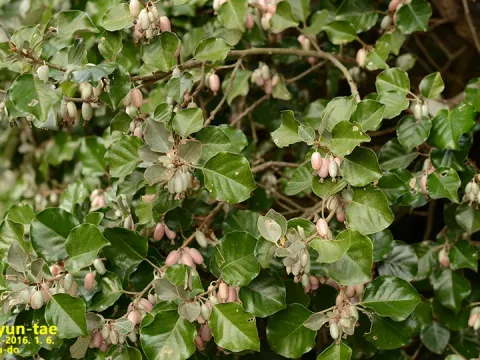
Broad-leaved oleaster
Elaeagnus macrophylla
The broad-leaved oleaster (Elaeagnus macrophylla) is an evergreen shrub belonging to the Elaeagnaceae family. It is native to the coastal regions of East Asia, particularly Japan and Korea. This species is highly valued for its exceptional tolerance to salt spray and maritime winds, making it a staple in coastal landscaping projects.
What the section contains
Broad-leaved oleaster
Botanically, this plant is recognized by its large, leathery, alternate leaves that feature a distinctive silvery-white coating on the underside. The young shoots are also covered in silver scales. It produces fragrant, bell-shaped flowers in autumn, followed by edible, oval-shaped fruits that ripen into a silvery-red hue, adding significant visual appeal to the garden during the colder months.
Climate requirements for this plant are centered on its need for moderate temperatures. While it thrives in mild, oceanic climates, it is somewhat sensitive to hard frosts. In colder inland regions, it should be situated against a south-facing wall or in a location protected from harsh winter winds to prevent leaf scorch and branch dieback.
Soil adaptability is one of the key strengths of Elaeagnus macrophylla. It flourishes in various soil types, including poor, sandy, and alkaline substrates. The plant's ability to fix atmospheric nitrogen through a symbiotic relationship with specific bacteria allows it to thrive in nutrient-deficient areas where other plants would struggle to establish.
Landscape use primarily focuses on its utility as a windbreak, a formal hedge, or a focal point in a coastal garden. Due to its dense growth habit and rapid development, it provides excellent privacy screening. Additionally, it is an ideal candidate for soil stabilization on embankments and sloping ground due to its wide-spreading root system.
Main threats to the plant's health involve fungal infections, specifically leaf spot, which can occur in stagnant, humid environments. To mitigate this risk, it is essential to provide adequate spacing during planting and perform regular thinning cuts to improve airflow throughout the foliage canopy.
Pest issues are mainly associated with scale insects, which can drain the plant's vitality. Early detection is crucial. If an infestation is identified, horticultural oils or systemic insecticides can be applied. Keeping the plant vigorous through appropriate watering and fertilization helps it resist pest attacks more effectively.