
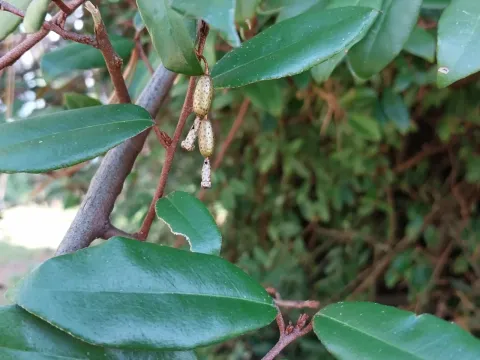
Spreading oleaster
Elaeagnus reflexa
The spreading oleaster (Elaeagnus reflexa) is a significant species belonging to the Elaeagnaceae family. Originally from East Asia, this evergreen shrub is recognized for its robustness and ability to thrive in diverse ecological niches, ranging from mountain slopes to coastal areas.
What the section contains
Spreading oleaster
This plant is characterized by its nitrogen-fixing capabilities, facilitated by actinomycetes on its root system. This biological trait allows it to flourish in nutrient-poor soils, making it an excellent candidate for land reclamation and improving soil structure over time.
In terms of light, the spreading oleaster prefers full sun exposure to maintain its dense foliage and healthy development. While it is tolerant of partial shade, full solar radiation promotes more vibrant leaf color and consistent growth rates throughout the vegetation period.
Soil requirements are relatively modest; the shrub performs best in well-drained loamy or sandy soils. It is notably tolerant of both saline environments and dry conditions, allowing for cultivation in areas where other ornamental or fruit-bearing crops might struggle to survive.
Regular maintenance involves pruning to control the plant's spread and improve airflow within the canopy. Since the species can be quite vigorous, pruning also serves to encourage the development of fruit and maintain the desired aesthetic shape of the shrub.
While the spreading oleaster is highly resilient, it can be susceptible to powdery mildew during periods of high humidity and stagnant air. Proper spacing and pruning are essential to facilitate air circulation and minimize the risk of fungal outbreaks.
Scale insects are among the most common pests affecting this shrub. These insects can cluster on stems, weakening the plant if not detected early. Regular monitoring during the spring and summer months is recommended to prevent infestation.
Root rot is a potential risk in waterlogged or heavy clay soils. Ensuring proper site drainage is the primary method for preventing this issue, as the plant's roots require good oxygen exchange to function effectively.
Certain soil-borne nematodes can pose a threat in specific environments, particularly in sandy regions. Maintaining overall plant vigor through proper site selection and healthy soil management is the best defense against these microscopic pests.
Pest management should be integrated into an overall plant health program that emphasizes cultural practices over chemical interventions, preserving the balance of beneficial insects within the agricultural ecosystem.