
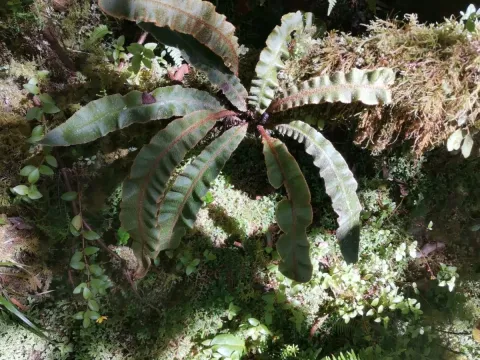
Elaphoglossum semicylindricum
Elaphoglossum semicylindricum
Elaphoglossum semicylindricum is a member of the Polypodiaceae family. This fern species is natively found in tropical regions, often growing as an epiphyte in humid forest ecosystems.
What the section contains
Elaphoglossum semicylindricum
The plant is known for its distinct, leathery, and narrow leaves, which give it its specific name. The rhizome is creeping and covered in scales, allowing it to anchor securely to bark or other organic surfaces.
Growing this species successfully requires a tropical environment with high humidity levels, ideally above 70%. It thrives when protected from direct sunlight, preferring filtered or diffused light conditions.
The soil or substrate must be highly porous and well-draining. A mix consisting of sphagnum moss, orchid bark, and perlite is often used to ensure that the root system has access to sufficient air and moisture without becoming waterlogged.
Temperature management is critical, as this fern prefers a consistent range between 18°C and 24°C. Extreme temperature fluctuations can lead to stress and slow down the plant's overall development significantly.
Fungal infections represent the primary threat to Elaphoglossum semicylindricum. Overwatering is the most common cause of root rot, which can quickly become fatal if not addressed through repotting and substrate replacement.
Pests such as scale insects and mealybugs can infest the fronds, especially in greenhouses or poorly ventilated spaces. Manual removal combined with biological control agents is recommended to maintain the plant's health.
Spider mites are a common issue when the surrounding air becomes too dry. Consistent misting and monitoring the humidity levels help in preventing mite outbreaks during the warmer seasons.
Nutrient deficiencies often manifest as leaf chlorosis or stunted growth. Using a diluted, balanced liquid fertilizer formulated for ferns during the active growing season is essential for long-term vitality.
Care must be taken to ensure good air circulation around the foliage. Stagnant air encourages the development of pathogens and significantly reduces the plant's natural resistance to diseases.