
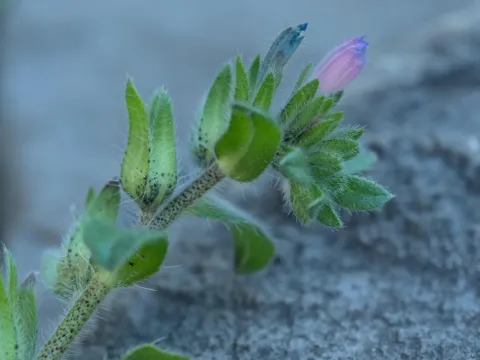
Echium calycinum
Echium calycinum
Echium calycinum is typically grown as an annual crop, requiring spring planting once the soil temperature consistently reaches 8–10 degrees Celsius. Early sowing is crucial to allow the plant to establish before summer heat.
What the section contains
Echium calycinum
Seeds should be sown at a shallow depth of 1–2 centimeters. Since the seeds are small, they require a well-prepared, fine-textured seedbed to ensure good contact with the soil for proper germination.
A seeding rate of 5–8 kilograms per hectare is generally recommended. Planting in rows spaced 15–20 centimeters apart facilitates easier weed management and allows for sufficient space between plants.
Firming the soil after sowing using a roller is a highly recommended practice. This promotes capillary action, drawing moisture to the seed level and ensuring uniform emergence across the field.
Under favorable moisture conditions, germination usually occurs within 7–10 days. Monitoring the field during this window is essential to detect any potential issues with crusting or soil moisture levels.
Belonging to the Boraginaceae family, this species is highly adaptable to various soil types, including sandy and loamy soils, provided they have excellent drainage to prevent root issues.
Echium calycinum is a sun-loving plant that demands full exposure to direct sunlight. Shading or overcrowding significantly reduces its physiological vigor and, consequently, its nectar secretion rates.
The plant is remarkably drought-tolerant, making it an excellent candidate for regions with arid or semi-arid climates. However, it is sensitive to waterlogging, which should be avoided at all costs.
It performs well in neutral to slightly alkaline soils. While it does not require high levels of soil fertility, moderate applications of phosphorus and potassium can enhance flowering duration and intensity.
Excessive nitrogen fertilizer should be avoided, as it tends to stimulate vegetative growth at the expense of reproductive development, which can reduce the overall honey-yielding efficiency.
The primary agricultural value of Echium calycinum lies in its high nectar production. It is highly sought after by apiarists for supporting honeybee colonies during peak summer months when other forage is scarce.
Honey derived from this plant is highly prized for its light color, delicate flavor, and slow crystallization process. These qualities make it a premium product in the natural honey market.
In addition to its apicultural value, the biomass can serve as a supplemental forage source for livestock, particularly sheep, which graze on the young, succulent shoots during the pre-flowering stage.
Seed production depends heavily on insect pollination. The proximity of healthy bee colonies to the fields is a critical factor in achieving maximum seed yields at the end of the growth cycle.
As a sustainable crop, it is often utilized in marginal land recovery programs, where it helps stabilize the soil structure while providing an economic return through beekeeping and seed collection.
Echium calycinum is generally hardy and displays significant resistance to common agricultural diseases. However, high humidity and poor air circulation can occasionally lead to powdery mildew outbreaks.
Aphids can be a problem during dry spells, attacking the soft terminal shoots of the plant. Regular field scouting is necessary to identify infestations before they cause significant damage.
Adhering to a robust crop rotation plan is essential to prevent the buildup of soil-borne pathogens. A minimum three-year gap between plantings on the same plot is recommended for soil health.
Weed competition during the seedling stage is the most significant threat to establishing a productive stand. Once the crop reaches the rosette stage, it generally outcompetes most common annual weeds.
Minimal chemical intervention is required, making this species a viable choice for low-input or organic farming systems that prioritize environmental sustainability and biodiversity.
Harvesting for seed is conducted when the majority of the calyces turn brown, indicating that the seeds have reached physiological maturity. Timing is critical to prevent pre-harvest seed shattering.
Direct combining is possible, but equipment must be calibrated with lower drum speeds to prevent crushing the delicate seeds. Two-stage harvesting, involving cutting and windrowing, is also common.
After harvesting, seeds must be dried immediately to a moisture content of 12–14 percent. Proper drying is essential to prevent heating and fungal growth during subsequent storage in silos or bags.
For forage purposes, the crop should be harvested during the early stages of mass flowering to capture the highest nutritional value in the stems and leaves before they become overly lignified.
Storage facilities should be cool, dry, and well-ventilated. Protecting the seed stock from rodents and stored-product insects is a standard requirement for maintaining long-term seed viability.