
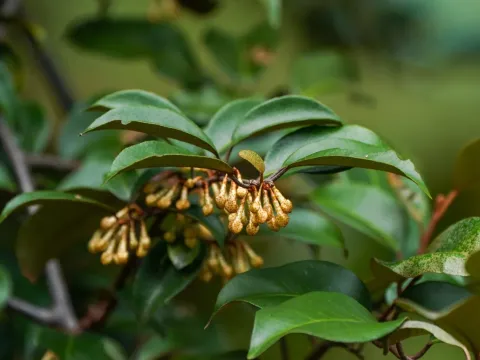
Elaeagnus glabra
Elaeagnus glabra
Elaeagnus glabra, commonly known as the evergreen silverberry, belongs to the Elaeagnaceae family. Native to East Asia, including regions in China, Japan, and Korea, this shrub is highly regarded for its attractive foliage and adaptability in diverse landscape settings.
What the section contains
Elaeagnus glabra
Botanically, the plant is characterized by its glossy, oval-shaped leaves and long, flexible branches that can display climbing tendencies. It is an evergreen shrub that maintains its density throughout the year, making it an excellent choice for privacy screens and hedge formations.
Regarding climatic requirements, this species favors temperate regions with mild winters. While it is quite hardy, extreme frost can damage the younger shoots. It thrives best in full sun or partial shade, which enhances its overall growth rate and foliage coloration.
The shrub is highly tolerant of various soil types, ranging from sandy loams to heavier clays, provided there is adequate drainage. One of its most significant agronomic features is the ability to fix nitrogen in the soil through a symbiotic relationship with specific bacteria, which improves soil fertility.
In terms of practical application, it is extensively used in landscape design to stabilize embankments and prevent soil erosion. Furthermore, it serves as a valuable nectar source for pollinators, significantly contributing to local biodiversity in suburban and rural environments.
The Elaeagnus glabra is noted for its exceptional resistance to many common plant diseases. Its robust nature makes it a low-maintenance option for both professional landscapers and amateur gardeners who prefer plants that require minimal intervention.
Occasional infestations by sucking insects like aphids or scale insects may occur, particularly if the plant is stressed by poor air circulation or improper watering. Keeping the plant properly pruned to allow for airflow usually prevents these issues from developing into significant problems.
Effective management strategies include periodic monitoring of the foliage and implementing preventive pruning to eliminate deadwood. This practice not only maintains the aesthetic appeal of the shrub but also removes potential habitats for pests.
Waterlogging is perhaps the most critical environmental threat to this species. Root rot can occur if the planting site lacks sufficient drainage, as the roots require a balance of moisture and oxygen to thrive effectively.
Overall, the plant is relatively pest-free and disease-resistant. When provided with a well-drained substrate and an appropriate amount of sunlight, it demonstrates a long lifespan with very little need for chemical fertilizers or pesticides.