
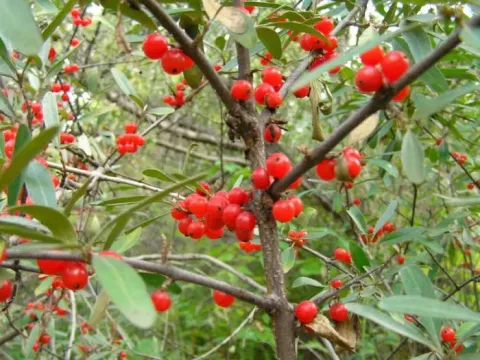
Shepherdia
Shepherdia
Propagation of Shepherdia is typically done through seeds which require a period of cold stratification, usually lasting several months, to break dormancy effectively.
What the section contains

Shepherdia
Vegetative propagation is also widely used, with softwood cuttings taken in early summer and kept under mist systems to maintain high humidity levels for root development.
When planting nursery-grown shrubs, spacing should be set at approximately 2.5 to 3 meters to ensure adequate airflow and sunlight penetration for the mature bushes.
As the plant is dioecious, gardeners must ensure a correct ratio of male and female plants, typically one male to four or five females, to guarantee reliable pollination and fruit set.
The planting site should be prepared by incorporating compost and ensuring excellent soil drainage, as the species is highly sensitive to waterlogged conditions.
Shepherdia is a member of the Elaeagnaceae family and is known for its extreme hardiness and preference for full sun exposure to maximize fruit production.
The shrub is well-adapted to various climates, capable of surviving harsh winters and significant temperature fluctuations while maintaining its overall health and vigor.
It thrives in diverse soil types, including sandy and rocky soils, thanks to its symbiotic relationship with nitrogen-fixing bacteria located in its root nodules.
While the plant is considered drought-tolerant once established, supplemental irrigation during the fruit-ripening stage is essential for obtaining a higher yield and plump berries.
Poorly drained, heavy clay soils should be avoided or amended with organic matter to prevent root rot, as the root system requires significant oxygen levels to function properly.
The shrub usually begins to produce its first fruits around 4 to 6 years after being established, eventually offering a generous harvest of bright red, nutrient-dense berries.
The berries are rich in vitamin C, antioxidants, and essential fatty acids, making them highly prized for their health-promoting properties and unique tart flavor profile.
Harvesting usually involves gathering berries in late summer or autumn; the flavor improves significantly after the first light frosts occur, as the sugar content increases.
These berries are highly versatile in the kitchen and can be processed into jellies, jams, juices, or dried for use in various culinary applications and baked goods.
Due to their ornamental appearance and productivity, Shepherdia shrubs are often integrated into edible landscapes, serving both aesthetic and functional purposes.
Shepherdia is exceptionally resistant to most common garden pests and diseases, largely due to the silvery scales on its leaves that act as a mechanical defense barrier.
The primary concern for this crop is soil-borne pathogens resulting from excessive moisture, which can compromise the root system if the site lacks proper drainage.
Rodents may occasionally damage the bark of young plants during winter months, making protective physical barriers around the base of the stems a recommended precaution.
The plant generally does not require chemical interventions, which supports its use in organic gardens and low-input agricultural production systems.
Regular pruning of dead or crossing branches is recommended to maintain plant health and ensure good light penetration, which prevents the build-up of excess moisture within the canopy.
Harvesting Shepherdia can be challenging because the branches are often protected by sharp thorns, necessitating the use of protective gloves for the gardener.
A common technique to speed up the harvest is placing a sheet or tarp under the shrub and gently shaking the branches to let the ripe berries fall off.
Harvested berries are quite delicate and have a short shelf life, so they should be cleaned and processed or frozen immediately to prevent rapid spoilage.
Freezing is an excellent way to store the berries, as it helps to mellow the tart flavor and preserves the nutritional value for long-term consumption throughout the year.
It is best to pick the berries when they are at the peak of their color, as this ensures the ideal balance of tartness and sugar for high-quality jams and preserves.