
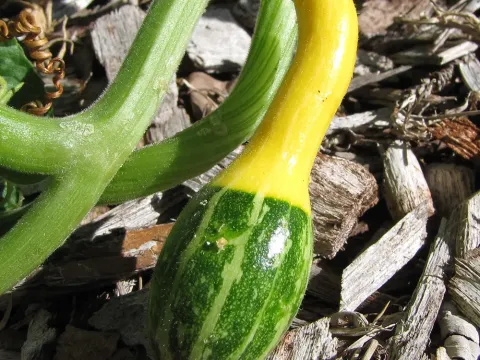
Egg-shaped gourd
Cucurbita ovifera
Egg-shaped gourds should be sown outdoors only after all danger of frost has passed. The ideal window for planting is late spring when soil temperatures at a depth of 10 cm have consistently reached at least +12 to +15 degrees Celsius.
What the section contains
Egg-shaped gourd
In regions with shorter growing seasons, starting seeds indoors is highly recommended. Sow seeds in individual peat pots about 4 weeks before the expected last frost date to allow for strong root development before transplanting.
Pre-soaking seeds for a few hours can improve germination rates significantly. Ensure the soil mix for seedlings is light, well-draining, and kept consistently moist but not waterlogged during the germination process.
Spacing is crucial for this vigorous vining crop. Provide at least 80–100 cm between plants to ensure adequate airflow, which is the best defense against many foliage diseases that thrive in dense, humid conditions.
Plant seeds 3 to 5 cm deep depending on the soil texture. In heavier soils, shallower planting is preferred to ensure the sprout reaches the surface before the seed’s energy reserves are depleted.
As a member of the Cucurbitaceae family, the egg-shaped gourd requires full sun exposure to flourish. It needs at least 6 to 8 hours of direct sunlight daily to produce high-quality, fully formed ornamental fruits.
The plant thrives in fertile, well-draining soil with a slightly acidic to neutral pH. Incorporating plenty of organic matter, such as compost or well-rotted manure, into the site before planting is essential for vigorous growth.
Consistent moisture is key, particularly during the flowering and fruit-setting stages. Avoid overhead watering, which can splash soil onto the leaves and promote fungal infections, by focusing water delivery directly to the base.
Regular maintenance includes pinching back the growing tips of the main vines once several fruits have set. This simple practice encourages lateral growth and directs the plant's energy toward maturing the existing fruit.
Mulching around the base of the plant helps retain soil moisture and suppresses weed competition. A layer of straw or wood chips also keeps the fruits off the soil, which prevents rot and keeps them clean for decorative purposes.
Powdery mildew is the most common threat, appearing as a white, dusty layer on the leaves. To manage this, ensure proper plant spacing and apply sulfur-based fungicides or neem oil at the first signs of infestation.
Anthracnose and other bacterial rots can occur if the humidity remains too high. Crop rotation is the most effective preventative measure, so avoid planting cucurbits in the same location for at least three consecutive years.
Aphids and spider mites are frequent pests that attack the foliage. They can be controlled using gentle insecticidal soaps or by encouraging beneficial predatory insects like ladybugs, which naturally keep pest populations in check.
Slugs and snails can cause damage to the developing fruits, especially during wet weather. Using physical barriers like crushed eggshells or copper tape can protect the fruits from these mollusks.
Regular garden hygiene is vital for disease control. Promptly remove and dispose of any plant parts that show signs of severe infection to prevent the spores from spreading to healthy parts of the crop.
The harvest should occur when the fruits reach their mature size and the rind has hardened. A key indicator is the stem, which will begin to turn brown, dry, and wither as the fruit reaches physiological maturity.
Use a sharp knife or pruning shears to cut the fruit, ensuring at least 5 cm of the stem remains attached. Fruits harvested without a stem are prone to rotting and will have a significantly shorter shelf life.
Post-harvest curing is a necessary step for ornamental gourds. Place them in a warm, dry, and well-ventilated area for several days to allow the outer skin to toughen up properly before storage.
While the fruits can be consumed when very young and tender, the egg-shaped gourd is primarily cultivated for its decorative value. It is a staple in autumn-themed displays, floral arrangements, and interior crafts.
Well-cured gourds can last for several months if kept in a cool, dry environment away from direct sunlight. They provide long-lasting ornamental interest, making them a popular choice for seasonal home decorations.