


Reference · Crops
Sea buckthorn
Hippophae L.
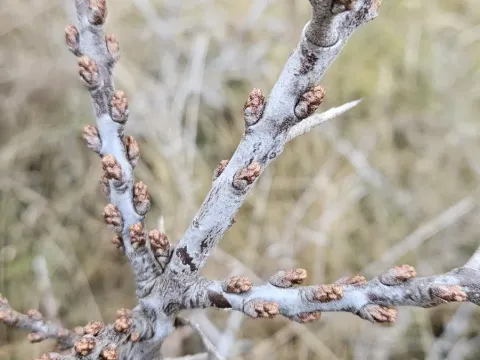
Sea buckthorn (Hippophae L.) is a perennial flowering shrub in the family Elaeagnaceae. Native to temperate regions of Europe and Asia, it is known for its ability to thrive in harsh environments, including coastal areas and mountain slopes.
1
items
What the section contains
Marketplace
Products in this section · 12


BOTANICAL AMATEUR
BOTANIChESKIJ SAD MGU IM.M.V.LOMONOSOVA
Sea Buckthorn
0
0
1 offer
0.29 €per pack
Buy
MOSCOW TRANSPARENCY
BOTANIChESKIJ SAD MGU IM.M.V.LOMONOSOVA
Sea Buckthorn
0
0
2 offers
0.29 €per pack
Buy

Sea buckthorn
This crop is highly heliophilous, requiring full sun exposure to maximize photosynthetic activity and fruit yield. It exhibits remarkable cold hardiness, capable of surviving temperatures as low as -40 degrees Celsius, making it suitable for northern climates.
Sea buckthorn prefers well-drained, sandy or gravelly soils. It is particularly valued for its ability to colonize poor or degraded land, as its roots form a symbiotic relationship with nitrogen-fixing bacteria, enriching the soil with essential nutrients.
The plant is dioecious, meaning male and female flowers are borne on separate individuals. Pollination is exclusively wind-driven, which requires careful planning of planting patterns to ensure male plants are positioned upwind of female specimens.
Water management is critical during the establishment phase, though mature plants are relatively drought-tolerant. Excessive moisture in the root zone is detrimental and should be avoided to prevent root rot and overall plant decline.
The crop is commercially significant in the food, cosmetic, and medicinal industries. The fruits and seeds are rich sources of omega-7 fatty acids, vitamin C, and antioxidants, which are in high demand globally.
Under optimal management, a healthy plantation can produce significant yields, often ranging from 10 to 15 kilograms of fruit per mature shrub. Orchards remain productive for 15 to 25 years if maintenance, including pruning, is provided consistently.
The most common pathologies affecting sea buckthorn include wilt diseases, such as Verticillium and Fusarium, which can lead to rapid death of branches or entire plants. Sanitation and selecting resistant cultivars are the primary preventive measures.
Insect pests, specifically the sea buckthorn fly and various moth species, pose significant risks. Monitoring programs and integrated pest management strategies are necessary to prevent crop loss during the critical fruit development stages.
Harvesting sea buckthorn is notoriously difficult due to the presence of sharp thorns and the soft nature of the berries. Modern orchards are increasingly using mechanical harvesting techniques, including vibration-based machines or branch cutting.
Harvest timing is determined by the intended use of the crop. Berries intended for juice production are harvested when fully mature and vibrant, whereas those harvested for oil extraction may be left on the branches slightly longer to optimize lipid content.