
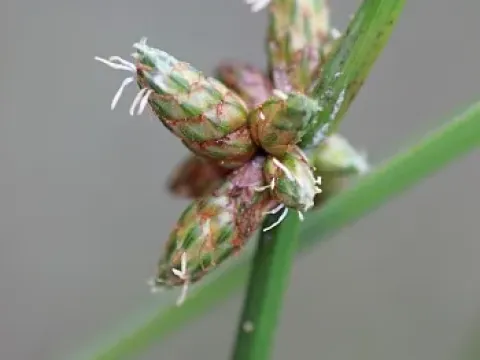
Trapezoid bulrush
Scirpus trapezoideus
The propagation of Scirpus trapezoideus is primarily achieved through rhizome division, which ensures rapid establishment in wet environments. Planting is best performed in early spring when the water and soil temperatures begin to rise consistently.
What the section contains
Trapezoid bulrush
When establishing a plantation, rhizome fragments should be planted at a depth of approximately 10–20 centimeters in a nutrient-rich, saturated substrate. Adequate spacing is crucial to prevent early crowding while allowing for robust development.
For large-scale cultivation, pre-germinated seedlings grown in nursery conditions offer a higher survival rate compared to direct planting of raw rhizome sections. Consistent hydration during the first weeks is essential.
Seed-based propagation is possible but requires high-moisture conditions and careful management of the growth medium. Due to the small size of the seeds, they should be barely covered with substrate to receive enough light for germination.
Effective stand establishment also involves protecting the young plants from excessive water flow or debris movement that could displace the rhizomes before they are firmly anchored.
Trapezoid bulrush (Scirpus trapezoideus) is a hardy perennial belonging to the Cyperaceae family. It thrives in wetland ecosystems, including marshes, pond edges, and seasonally flooded fields, where the soil remains consistently moist.
The species prefers sunny locations and performs best in fertile, silt-rich or organic substrates. It has a high tolerance for varying water depths, making it an excellent candidate for aquatic landscape management and ecological restoration.
Regarding climate, the plant exhibits significant cold tolerance, which is essential for survival in temperate zones. It adapts well to diverse temperature profiles throughout the growing season.
Agricultural management requires maintaining stable water levels. While the plant is resilient, prolonged dry periods can severely hinder its growth and reduce the overall quality of the harvested biomass.
Nutrient availability, particularly nitrogen and phosphorus in the water, stimulates vigorous development. However, excessive pollution should be avoided to ensure the biomass remains suitable for processing and not hazardous.
Trapezoid bulrush is valued primarily for its high-biomass production. The aerial stems serve as a raw material for various industries, including sustainable paper production, weaving, and bio-based construction materials.
Productivity is highest in managed wetlands where nutrient influx is balanced. A well-established stand can provide significant annual yields of harvestable stems without requiring intensive fertilization or chemical inputs.
Beyond material yield, the plant is a champion in phytoremediation. Its extensive root system absorbs significant amounts of water pollutants, effectively improving water quality in drainage channels and constructed wetlands.
While the foliage can be used for limited livestock grazing, its high fiber content means it is not a primary forage crop. Its main value remains its structural biomass for industrial and environmental applications.
The energy density of dried stems also suggests potential as a solid biofuel source, allowing for a multifaceted approach to farm income generation from wetland areas.
Fungal pathogens represent the most significant threat to the crop, particularly during humid seasons with poor airflow. These infections can cause stem decay and discoloration, reducing the value of the final product.
Insect pests, specifically stem borers, can invade the hollow tissues, damaging the structural integrity of the crop. Integrated pest management, involving the maintenance of healthy, non-stagnant water, helps mitigate this risk.
Drastic drops in water levels that lead to soil drying are dangerous for the crop's long-term viability. Furthermore, invasive aquatic weed species can outcompete the bulrush if not monitored regularly.
Heavy metal accumulation in the tissue is a potential concern if the plant is grown in highly contaminated wastewater. Regular tissue analysis is recommended if the biomass is intended for commercial use.
Winter damage is rare due to the plant's hardiness, but freezing the entire water column to the root depth can cause mechanical injury to the rhizomes in shallow ponds.
Harvesting usually occurs at the end of the growth cycle when the stems reach full physiological maturity and possess the lowest moisture content. This period generally coincides with late summer or early autumn.
Mechanical harvesting using aquatic cutters is the most efficient method for large plantations. The cut should be made precisely to maximize biomass yield while leaving the root crown intact for regeneration.
Post-harvest management involves binding the stems and ensuring proper air circulation during drying. Preventing moisture retention in the harvested piles is essential to avoid microbial contamination.
Grading the material by stem diameter and height allows for specialized marketing, such as selecting uniform stalks for decorative crafts versus pulp for paper production.
Sustainable harvesting practices ensure the longevity of the plantation, allowing for continuous yearly production from the same established stand of Trapezoid bulrush.