
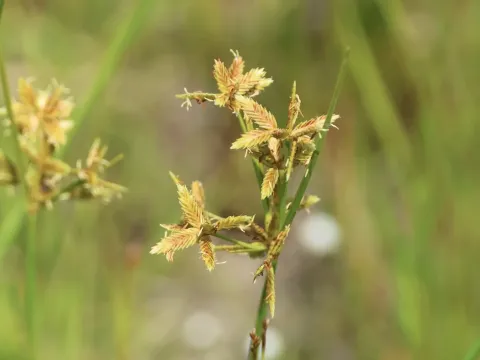
Toothed flatsedge
Cyperus dentatus
Toothed flatsedge (Cyperus dentatus) belongs to the Cyperaceae family, a group of grass-like plants commonly found in moist environments. It is a perennial species native to eastern North America, where it thrives in wetlands, sandy shores, and boggy meadows.
What the section contains
Toothed flatsedge
Morphologically, the plant is characterized by its slender, triangular stems and distinct, pale-green inflorescences composed of small, flattened spikelets. The underground structure often involves a rhizomatous system that allows it to colonize wet, unstable soils effectively.
The ecological requirements of this species focus on water availability. It is considered an obligate wetland plant, meaning it necessitates saturated soil conditions to maintain its physiological functions. It prefers acidic, nutrient-poor substrates, particularly those consisting of sand or peat.
Cultivation or management of this species involves maintaining consistent hydrological conditions. Because it is highly sensitive to desiccation, any agricultural or restoration efforts must ensure that the water table remains high throughout the growing season to prevent plant stress.
While not a traditional commercial crop, toothed flatsedge is valuable in ecological engineering. It serves as an effective ground cover in wetland restoration projects and contributes significantly to the stabilization of shorelines, preventing soil erosion in aquatic ecosystems.