
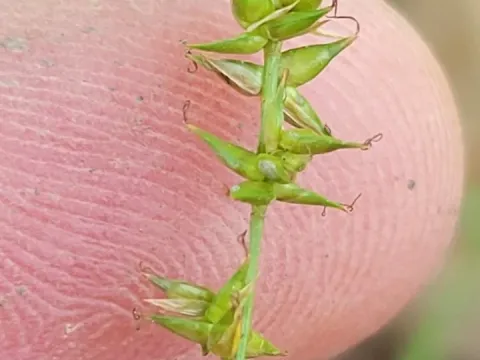
Texas sedge
Carex texensis
Texas sedge is typically sown in early spring when temperatures are consistently warm, allowing the seeds to germinate efficiently in open ground.
What the section contains
Texas sedge
If you are collecting seeds, remember that they benefit significantly from a period of cold stratification before the final sowing process begins.
Seeds should be lightly covered with a thin layer of soil or compost, as they need a degree of light exposure to trigger the germination mechanism.
Maintain moisture levels constantly during the establishment phase, ensuring the soil does not dry out while the seedlings develop their roots.
Division of mature clumps is a highly recommended method for propagation, allowing gardeners to expand their plantings quickly and reliably.
Belonging to the Cyperaceae family, Texas sedge is a versatile perennial species known for its adaptability to various garden environments.
It thrives best in well-draining soils but shows remarkable tolerance to different soil textures, including sandy and rocky substrates found in its native range.
The plant performs exceptionally well in both full sun and partial shade, making it a perfect choice for ground cover under trees or in open borders.
Once established, this species exhibits good drought tolerance, although it remains lush and green with regular, light irrigation during the summer heat.
Maintenance is minimal, requiring only the removal of old, dry foliage in late winter or early spring to encourage fresh, vibrant growth for the season.
Texas sedge is generally robust and rarely suffers from severe pest infestations, provided that it is planted in appropriate soil conditions.
Over-irrigation is the primary cause of decline, as it frequently leads to root rot, especially in poorly drained clay soils where moisture persists.
In humid climates or during periods of heavy rainfall, the foliage may occasionally show signs of fungal spot or rust, which are rarely lethal.
While typically resistant, aphids or spider mites can occasionally appear, particularly during prolonged drought periods when the plant is stressed.
Good cultural practices, such as ensuring proper spacing between plants and avoiding overhead irrigation, are the best defenses against these threats.