
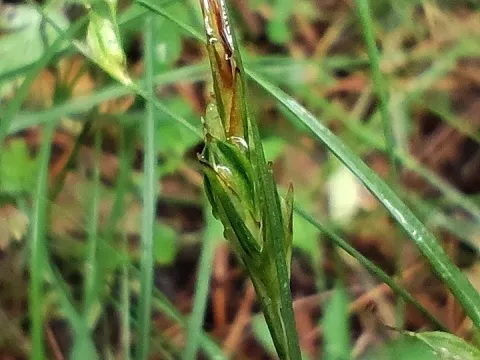
Two-spike sedge
Carex distachya
The two-spike sedge (Carex distachya) is a perennial herbaceous plant belonging to the Cyperaceae family. It is native to the Mediterranean basin, naturally occurring in rocky areas and forest edges, which defines its adaptability.
What the section contains
Two-spike sedge
Botanically, this species is characterized by its compact, tufted growth habit. It develops narrow, tough, dark green leaves that grow in dense clumps, typically reaching a height of 20 to 50 centimeters, making it suitable for decorative edging.
The plant thrives in well-drained soils and demonstrates excellent drought tolerance once established. It is not overly demanding of soil fertility, although it prefers substrates with a neutral or slightly acidic pH balance.
When it comes to light exposure, Carex distachya is versatile, performing well in full sun or partial shade. Exposure to full sun helps the plant maintain a tighter, more uniform clump structure throughout the growing season.
Maintenance is straightforward, involving the removal of dead foliage in the early spring. This practice clears the way for fresh growth and ensures the plant remains vigorous throughout the year, even in challenging garden conditions.
Carex distachya is considered a highly resilient and low-maintenance plant. It is rarely bothered by serious plant diseases, provided that the soil is not waterlogged, which can induce root rot in stagnant conditions.
The most common issues are fungal leaf spots, which typically appear during periods of prolonged high humidity. Improving airflow around the plant by ensuring adequate spacing is the best preventive strategy against such infections.
Pest problems are minimal, though aphids can occasionally settle on young, tender shoots. In most cases, these are managed by natural predators, and chemical intervention is rarely necessary for this robust species.
In wet climates or during rainy springs, slugs and snails may graze on the young foliage. Protective measures such as stone or gravel mulch around the base of the clump often act as an effective deterrent.
General plant health is maintained by practicing good garden hygiene. Removing any discolored or damaged leaves throughout the season will prevent the potential spread of pathogens and keep the plant aesthetically pleasing.