
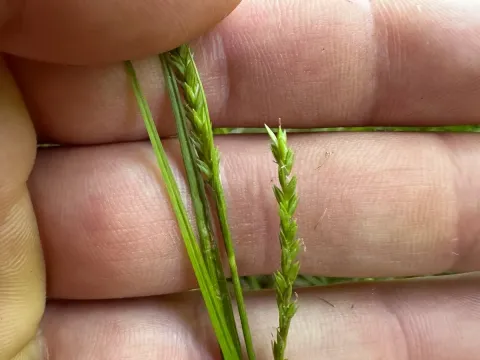
Thin-spiked sedge
Carex strigosa
Thin-spiked sedge (Carex strigosa) is a perennial member of the Cyperaceae family. It is typically found in moist, shaded woodlands and near water bodies across its native European range. The plant is characterized by its slender appearance and the ability to thrive in environments with consistent moisture availability.
What the section contains
Thin-spiked sedge
Regarding soil requirements, this species favors nutrient-rich, damp, and slightly acidic substrates. It is not suitable for dry or arid conditions, as its physiological mechanisms are adapted to saturated soils. Optimal growth occurs in shaded or semi-shaded areas where the risk of heat-induced desiccation is minimized.
The climate requirements for Carex strigosa are centered on temperate conditions with sufficient rainfall throughout the year. It possesses a high degree of cold tolerance, allowing it to survive winter dormancy successfully and initiate early growth in the spring when moisture levels are at their peak.
Botanical features include narrow, bright green leaves and drooping spikes that give the species its common name. The plant grows in clumps, and its root structure is highly effective at stabilizing soil, which makes it a valuable species for ecological restoration projects in low-lying agricultural areas.
Agricultural use of thin-spiked sedge is primarily ecological rather than industrial. It is used as a cover crop in damp sites where standard grass species fail to thrive, contributing to pasture biodiversity and protecting riparian zones from nutrient leaching and soil erosion.
The primary threats include fungal pathogens that flourish in stagnant water conditions. Root rot is a significant concern if drainage is not managed correctly. Furthermore, leaf spot diseases may occur during excessively humid summers, requiring careful monitoring of the canopy health.
In terms of pests, slugs and snails can pose a challenge, especially in shaded, moist environments where the plant resides. These pests can consume young shoots, hindering the establishment of new plants. Integrated pest management, focusing on habitat maintenance, is usually sufficient to mitigate these risks.