
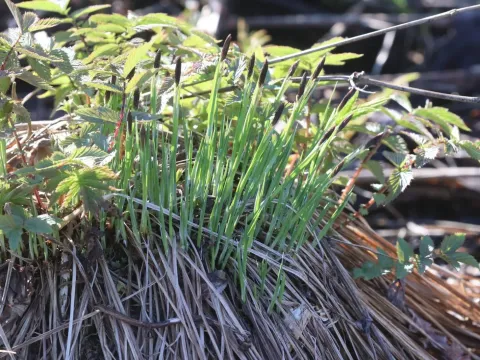
Tufted sedge
Carex cespitosa
Tufted sedge (Carex cespitosa) is a perennial herbaceous plant belonging to the Cyperaceae family. It is naturally found in temperate regions across Eurasia, typically inhabiting lowland marshes, wet meadows, and the margins of ponds and lakes.
What the section contains
Tufted sedge
The plant is highly adapted to waterlogged environments. It prefers heavy soils, such as clay or peat, where the water table is permanently high. The species is capable of withstanding prolonged periods of saturation, making it a key species in wetland ecosystems.
The defining botanical feature of this species is its dense, tussock-forming growth habit. These clumps of roots and stems provide stability to the plant, allowing it to remain rooted even in unstable, saturated soil conditions that would be unsuitable for many other grasses.
Tufted sedge requires plenty of sunlight for optimal development. While it can survive in partial shade, shading typically reduces the density of the tussocks and leads to a decrease in overall biomass production and aesthetic quality.
Cultivation requires maintaining a consistent moisture regime. In agricultural or landscape settings, the soil must be kept moist throughout the growing season, as drought stress is the primary factor limiting the survival of this species.
In terms of agriculture, tufted sedge is rarely grown as a primary forage crop. Its nutritional profile is relatively poor, as the leaves contain high levels of silica and lignin, making them coarse and unpalatable for cattle, especially after the flowering stage.
The green biomass yield typically ranges from 15 to 30 decitons per hectare in natural stands. Instead of animal feed, the primary economic value of the plant lies in its role as a tool for phytoremediation and soil conservation on degraded riparian zones.
The roots of Carex cespitosa are highly effective at filtering nutrients from agricultural runoff, which helps prevent water pollution. This makes it a valuable plant for biofiltration systems designed to treat wastewater in rural areas.
When harvested early in the season, the plant can be utilized as a bedding material for livestock or as organic mulch. Its tough structure makes it durable and resistant to quick decomposition, which is beneficial for certain horticultural applications.
Furthermore, the species is increasingly valued in ornamental landscape gardening. Its structural, mound-forming shape makes it a popular choice for water garden design, providing a stable, low-maintenance feature that thrives in wet spots where other plants would fail.
Tufted sedge is remarkably resistant to most agricultural diseases. However, in poorly ventilated, stagnant water environments, occasional outbreaks of rust fungi may occur on the foliage, though this rarely impacts the health of the entire colony.
Insect pests include various species of aphids and specialized beetles that feed on the flowers or young shoots. Under normal conditions, these pests do not pose a significant threat to the plant's survival or overall yield capacity.
The most significant threat to tufted sedge populations is land drainage and environmental drying. Altering the hydrology of a wetland site will almost certainly lead to the death of the sedge, as it cannot compete with dry-land flora without water.
Intensive grazing can also prove detrimental to the colony. If livestock trampling destroys the center of the tussock, the plant becomes susceptible to secondary infections and colonization by opportunistic weed species.
Maintenance involves occasional mowing to remove old, dead foliage. Removing accumulated plant debris every other season encourages new growth and keeps the tussocks vigorous, preventing them from becoming overly dense and congested.