
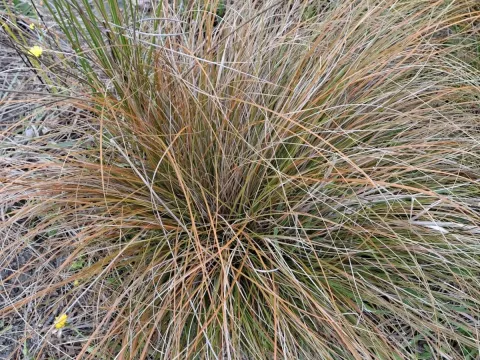
Testacea sedge
Carex testacea
Carex testacea, commonly known as the Testacea sedge or orange sedge, is a perennial plant in the Cyperaceae family, native to New Zealand. In agricultural and horticultural settings, propagation is achieved through seeds or dividing mature clumps.
What the section contains
Testacea sedge
Seeds should be sown indoors in late winter or early spring. A period of cold stratification significantly enhances germination rates, as the seeds respond well to temperature fluctuations.
Seedlings should be hardened off and transplanted into the field or garden once the danger of frost has passed. Planting density should allow for adequate airflow, typically spacing plants 30–50 cm apart.
Division is the most effective way to multiply established plants. This should be carried out in early spring just as new growth begins, ensuring that each division has a healthy root system.
Consistent moisture is required during the early stages of establishment. Once the plant has developed a robust root system, it becomes increasingly resilient to environmental stress.
The key to achieving the distinctive copper-orange coloration of this sedge is direct sun exposure. Plants grown in shaded areas tend to lose this pigment, appearing mostly green.
The plant thrives in well-draining soil, ranging from sandy to loamy textures. It is sensitive to waterlogged conditions, which can lead to root rot during the dormant season.
Carex testacea is moderately drought-tolerant, but supplemental watering during peak summer heat ensures the foliage remains vibrant and prevents tip burn.
Soil pH should be neutral to slightly acidic. While the plant is not a heavy feeder, a balanced, slow-release fertilizer applied in early spring can promote vigorous growth.
The plant is hardy in many climates but benefits from winter protection in colder regions, such as mulching around the base to protect the crown from harsh frost.
Excessive soil moisture is the primary threat to the long-term health of Carex testacea. Ensuring proper drainage is essential for preventing fungal diseases in the root zone.
The species is generally resistant to most pests. However, during hot and dry spells, aphids may occasionally infest new growth, necessitating the use of mild insecticides.
Fungal leaf spots can occur if plants are overcrowded or if the planting site lacks sufficient air circulation. Pruning away older foliage helps manage humidity levels within the clump.
Integrated pest management should focus on maintaining plant health through proper spacing and moisture control rather than heavy reliance on chemical pesticides.
Competition from aggressive weeds can stunt the growth of young sedge plants, so keeping the base of the plant clear during the first two seasons is critical.
The primary use of Carex testacea is ornamental. It is widely employed in landscape design for its unique color, texture, and ability to hold soil on banks or slopes.
Seed harvesting should occur in late summer when the seed heads turn a tan or brown color. They should be collected promptly to prevent loss due to natural shedding.
Annual maintenance involves cutting back the foliage in early spring to approximately 5–10 cm above the crown. This practice rejuvenates the plant and encourages a fresh, vibrant flush of leaves.
The plant is excellent for container gardening, providing a striking contrast in mixed borders or patio arrangements. It requires minimal maintenance once settled in pots.
Due to its evergreen nature in milder climates, Carex testacea provides year-round visual interest, making it a valuable asset for low-maintenance landscapes.