
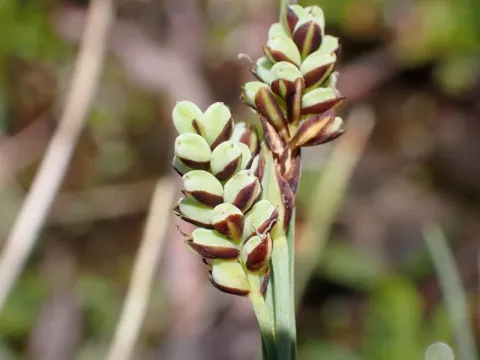
Two-colored sedge
Carex bicolor
Two-colored sedge (Carex bicolor) is a perennial herbaceous plant belonging to the Cyperaceae family. It is widely distributed across the arctic and subarctic zones of the Northern Hemisphere.
What the section contains
Two-colored sedge
The plant thrives in cold, moist environments. Its typical habitats include river banks, stream margins, and damp, gravelly areas where mineral soils are present.
Agronomically, this species is highly specialized for short growing seasons. It requires consistent moisture throughout the summer to maintain its vigor and reproductive capacity.
Botanically, it is recognized by its distinct two-colored spikes, from which it derives its name. The plants usually grow in small, loose tufts with slender culms.
While not a traditional industrial crop, it serves as an essential part of natural pastures for northern reindeer husbandry and contributes to the stability of arctic ecosystems.
The primary threat to Carex bicolor populations is the alteration of hydrological conditions. Drought or the drainage of its native wetland sites severely limits the plant's survival.
Fungal pathogens such as rusts and various leaf-spotting fungi pose a risk, especially during seasons with unusually high humidity and lack of airflow.
Insect pests include various types of northern beetles and sawflies that feed on the foliage, potentially reducing the biomass of the local stands.
Climatic warming poses a long-term threat as more competitive grass species migrate north and displace this specialized arctic sedge from its niche.
Mechanical damage from overgrazing or land development can lead to soil compaction and the destruction of the delicate root systems that hold these riparian zones together.