
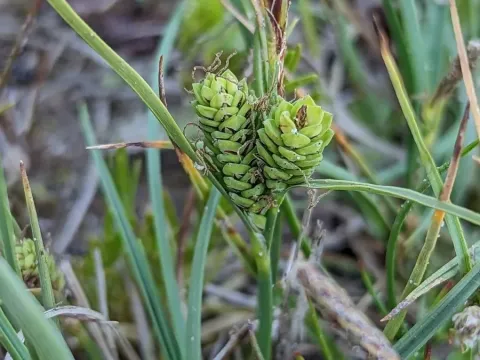
Three-nerved sedge
Carex trinervis
Three-nerved sedge (Carex trinervis) is a perennial herbaceous plant belonging to the Cyperaceae family. It is a vital component of wetland vegetation, recognized for its robust rhizomatous system that stabilizes soil in saturated environments.
What the section contains
Three-nerved sedge
The natural range of this species covers wetlands, fens, and riparian areas across Europe. It thrives in soils with high water tables, specifically in lowland areas where flooding is a frequent occurrence.
The plant has specific moisture requirements, preferring environments that remain saturated for most of the growing season. It exhibits significant tolerance to prolonged submergence, making it suitable for erosion control.
Soil preferences include organic-rich mucky or peaty substrates with neutral to slightly acidic pH levels. The species is highly cold-hardy, adapting well to the temperature fluctuations of northern temperate zones.
Effective management requires maintaining a stable hydrological cycle. Dry conditions pose a significant challenge, often resulting in reduced biomass accumulation and potential loss of the crop from the stand.
The economic value of this sedge is primarily linked to forage production in natural or semi-natural wet meadows. Yield depends heavily on soil nutrient content and the length of the spring flood period.
Under favorable conditions, the yield can reach 1.5 to 3 metric tons of hay per hectare. Timing is essential for forage quality, as early harvesting ensures better nutritional value for livestock.
Beyond forage, the plant is increasingly used in bioengineering and landscape architecture for water purification and pond-side restoration projects.
Biomass production can be enhanced through cautious nitrogen application, though this must be balanced with strict environmental guidelines to prevent nitrogen runoff into aquatic systems.
Consistent and well-timed harvest cycles facilitate long-term stand productivity and root health, ensuring the crop remains resilient for future growing seasons.
Three-nerved sedge generally displays strong resistance to pests and diseases; however, dense stands can occasionally be impacted by leaf rusts when humidity remains extremely high.
Invertebrate pests that target the reproductive structures can reduce seed set, hindering the plant's ability to regenerate through sexual reproduction in managed sites.
Overgrazing remains the primary threat to the stability of sedge meadows, as heavy animal traffic leads to soil compaction and the destruction of the vegetative mat.
Preventative measures include regular mowing to ensure adequate air circulation within the stand, which mitigates the development of fungal pathogens and maintains overall plant vigor.
Changes in local water tables, often caused by industrial drainage of nearby farmland, represent a significant ecological risk to the survival and yield of this sedge crop.