
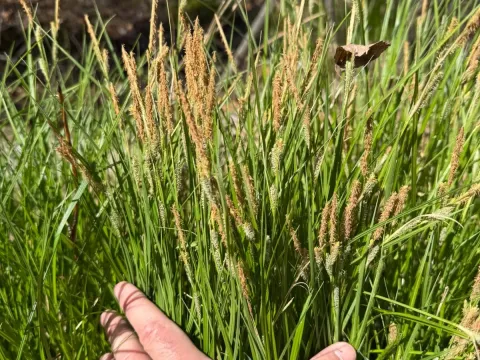
Tussock sedge
Carex stricta
Tussock sedge (Carex stricta) is a prominent perennial herbaceous species within the Cyperaceae family. It is well-known for its characteristic growth pattern, forming dense, elevated clumps or tussocks that provide essential structural stability in various wetland habitats across its native range.
What the section contains
Tussock sedge
The primary requirement for successful growth is consistent soil moisture. This plant is a typical hydrophyte, thriving in saturated conditions, shallow marshes, and seasonally flooded meadows. It possesses a high tolerance for waterlogging, which often inhibits the growth of other competitive grass species.
Regarding soil preferences, Carex stricta performs best in organic-rich soils, such as peat or wet silts. While it exhibits some tolerance for a range of soil pH levels, it flourishes in acidic to neutral environments. Nutrient availability is generally supported by periodic sedimentation in natural floodplains.
Climatic adaptability of this species is notable, as it is highly winter-hardy and capable of enduring frost cycles. It begins its vegetative growth early in the spring, taking advantage of cold, wet conditions before warmer temperatures dominate the landscape.
Its agricultural and ecological value is significant. It is widely used in environmental engineering for shoreline stabilization, soil erosion prevention, and as a keystone species for habitat restoration projects in riparian corridors and wetlands.
Fungal diseases remain the most significant threat to Tussock sedge, particularly in stagnant, humid environments. Rust fungi are the most frequent offenders, manifesting as leaf discoloration that can reduce the overall health of the tussock if left unmanaged.
Pest pressures primarily include root-feeding insects and stem-boring larvae that may tunnel into the dense base of the clump. These infestations are often more pronounced in locations where the plant is stressed by prolonged drought or poor water quality.
To mitigate disease outbreaks, it is crucial to ensure good airflow within planting sites. Although not always necessary for wild populations, controlled management in nursery or restoration settings includes removing dead leaf litter to reduce inoculum buildup.
Competition from invasive species can suppress young Tussock sedge plants. Managing site access to prevent the introduction of aggressive weeds is a key part of the establishment phase for this crop.
Overall, Carex stricta displays a robust immune system that allows it to persist for decades in favorable environments. Vigilance is only required during extreme weather events, which can weaken the plant and temporarily increase its vulnerability to pathogens.