
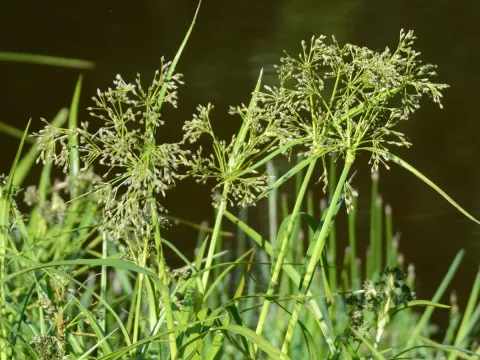
Creeping club-rush
Scirpus radicans
Propagation of Scirpus radicans primarily occurs through vegetative growth, where the arched, elongated stems touch the soil and take root, forming new plantlets.
What the section contains
Creeping club-rush
Seeds can be collected for generative propagation, typically sown in early spring into moist, nutrient-rich silt or specialized aquatic soil mixes.
When establishing new colonies, division of mature rootstocks is the most reliable method, ensuring each segment has healthy buds for future development.
Optimal planting depth in artificial environments should not exceed the lower half of the plant's stem, allowing the root system to settle into the pond bed.
Young plants require consistent moisture during the establishment phase, as drying out is detrimental to their initial growth and successful root development.
The Creeping club-rush belongs to the Cyperaceae family and is an obligate hydrophyte that thrives in wetlands, pond margins, and river floodplains.
It prefers nutrient-rich, silty soils that provide a stable medium for its shallow but extensive root system to thrive in stagnant or slow-moving waters.
Light intensity plays a crucial role in the development of the plant; it thrives best in open, sunny locations where it can maximize its photosynthetic activity.
Climatic requirements are moderate, as the plant is hardy and well-adapted to temperate regions, capable of surviving harsh winter freezes in moist soil.
Maintenance of appropriate water levels is essential; the species is highly sensitive to total dehydration, which can stunt its growth and cause premature death.
While not a traditional food crop, Scirpus radicans is highly valued for its utility in environmental engineering and water quality management.
It functions as an efficient bio-filter, helping to strip excess nitrates and phosphates from runoff, thereby mitigating eutrophication in ponds and small lakes.
The harvested biomass is an excellent source of organic material, which can be processed into high-quality compost for specialized horticulture and soil conditioning.
In landscaping, the yield is measured in its ability to produce dense, attractive cover that stabilizes shorelines and prevents soil erosion effectively.
Regular maintenance of these plant communities ensures a steady production of biomass, supporting the ecological balance of the surrounding aquatic habitat.
Common diseases affecting the species include fungal leaf blights, which often emerge if the planting density is too high, leading to poor air circulation.
Pests such as aphids and spider mites can infest the foliage, particularly during extended periods of drought when the plant's overall health is compromised.
Competition from more aggressive invasive species like common reed or cattail poses a significant threat to the survival of creeping club-rush colonies.
Environmental threats also include drastic water level fluctuations, as the plant requires stable hydrology to survive and propagate throughout the growing season.
Sanitation practices, including the removal of decaying organic matter, are vital to preventing the spread of diseases and keeping the population vigorous.
Harvesting is typically performed towards the end of the summer season to maximize the biomass yield before the plant enters its natural winter dormancy.
Standard scythes or mechanical cutters are used to harvest the stalks, taking care not to disturb the underlying root systems that anchor the plant to the soil.
After cutting, the biomass must be dried thoroughly to reduce moisture content and prevent microbial degradation during storage in farm buildings.
Storage requires well-ventilated conditions to maintain the quality of the harvested material, ensuring it remains useful for composting or other applications.
Leaving a portion of the harvest uncollected is recommended to provide habitat for local wildlife and to ensure the natural replenishment of the seed bank.