
Curved sedge
Carex curvula
Description
Growing requirements
Curved sedge (Carex curvula) is a perennial herbaceous plant belonging to the Cyperaceae family. It is a typical representative of the high-mountain alpine flora, possessing high adaptability to extreme high-altitude conditions.
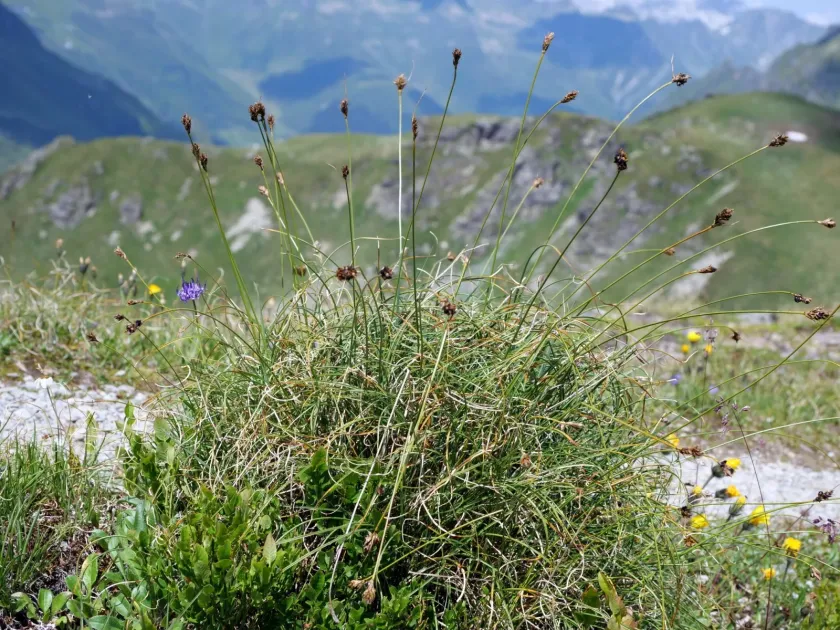
This crop is characterized by dense tufted growth, forming thick mats that prevent soil erosion on steep mountain slopes. The leaves of the plant are rigid, narrow, and often curved, which serves as an evolutionary defense against moisture loss.
Its natural range is limited primarily to the alpine belt of Central and Southern Europe. The plant prefers acidic, nutrient-poor soils on silicate substrates, often occurring at elevations from 2000 to 3000 meters above sea level.
The crop has strict requirements for climatic conditions: it is extremely resistant to low temperatures and ground freezing. However, it is critically dependent on the duration of snow cover, which protects the vegetative buds from drying winter winds.
In agricultural terms, curved sedge plays an important role as a component of the natural vegetation in alpine pastures. Although its nutritional value is lower than that of tender grass species, it ensures the survival of livestock in environments where other plants cannot grow.
Main diseases and pests
Typical diseases for this species in the wild include fungal infections such as rust and various types of smut, which develop during periods of high humidity.
Pests of the sedge include specialized insects, particularly certain lepidopteran caterpillars and coleopteran larvae that feed on the underground parts of the plant or the root zone.
Climate change and intensive livestock grazing pose a serious threat to the population, causing degradation of the turf and a decrease in species diversity.
Excessive mechanical impact from animal hooves leads to the destruction of soil structure, which hinders the recovery of the sedge in damaged areas.
Managing negative factors requires adherence to grazing norms and the protection of high-mountain ecosystems from anthropogenic soil compaction.