
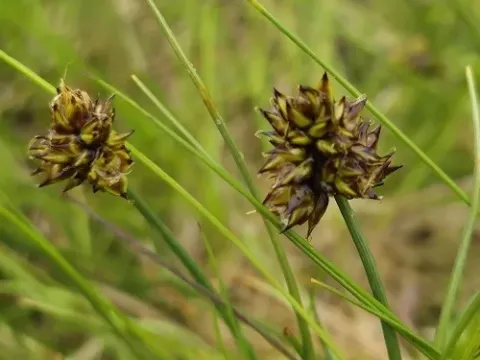
Curved sedge
Carex maritima
Curved sedge (Carex maritima) is a perennial herbaceous plant belonging to the Cyperaceae family. It is widely distributed across Arctic and sub-Arctic regions, frequently found in coastal habitats and mountainous areas of the Northern Hemisphere.
What the section contains
Curved sedge
The plant is highly specialized for growth in harsh environments, including saline coastal meadows, sand dunes, and gravelly substrates. Its ability to tolerate salinity and periodic flooding makes it a critical component of coastal ecosystems.
Botanically, it is characterized by its rhizomatous growth habit, forming compact, dense tufts. The leaves are narrow, glaucous green, and specialized for surviving strong, cold winds and arid atmospheric conditions near the coast.
Regarding climate, Carex maritima is an obligate cold-adapted species. It thrives during short growing seasons and requires consistent moisture levels in the substrate to prevent physiological drought during its active growth phase.
Cultivation requires careful attention to soil drainage. While the species is tolerant of poor nutritional content in soil, it performs best when the substrate provides sufficient moisture retention without becoming stagnant or waterlogged for extended periods.
Primary threats to Carex maritima include root rot diseases caused by soil pathogens that thrive in waterlogged, poorly aerated conditions. Maintaining proper drainage is the most effective management strategy against these pathogens.
Insect pests, including various larvae that feed on the foliage, can pose significant challenges. These pests reduce the photosynthetic capacity of the sedge, which is already working within a limited timeframe of the growing season.
Invasive weed encroachment is a major limiting factor, particularly during the establishment phase. Because Carex maritima has a relatively slow growth rate initially, it is easily outcompeted by faster-growing aggressive plants.
Chemical stress from improper fertilization can disrupt the plant's natural adaptation to salinity. Excessive nitrogen application often leads to weakened cell walls, making the plants more susceptible to both environmental stress and pest attacks.
Physical damage to the root system and turf remains the greatest threat. As a rhizomatous plant, it relies on the integrity of the soil structure to spread, and any mechanical disturbance significantly reduces the plant's viability.