
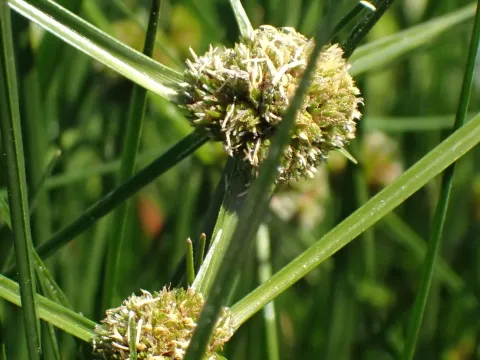
Cuban bulrush
Scirpus cubensis
Cuban bulrush (Scirpus cubensis, synonymous with Oxycaryum cubense) is a perennial wetland plant belonging to the Cyperaceae family. It is recognized for its ability to thrive in aquatic environments, often forming dense mats that float or remain anchored in shallow marshy soils.
What the section contains
Cuban bulrush
Native to tropical and subtropical regions of the Americas and parts of Africa, this plant is well-adapted to warm climates. It requires consistent light exposure and high ambient temperatures to support its rapid vegetative spread and biomass accumulation throughout the growing season.
The plant demonstrates a strong preference for nutrient-rich, silty substrates found in marshes, ponds, and slow-moving river edges. It is highly tolerant of fluctuating water levels, which makes it an opportunistic colonizer in disturbed wetland ecosystems and areas prone to periodic inundation.
Biologically, the plant features distinct triangular stems and complex rhizome systems that allow for modular growth. Its inflorescences are characterized by clustered, head-like structures that are highly visible, facilitating efficient reproduction in high-moisture settings where other competing vegetation might struggle.
In terms of agricultural and environmental utilization, Cuban bulrush is primarily valued for its role in bioremediation and shoreline protection. Its ability to sequester nutrients from the water makes it a candidate for constructed wetlands designed to treat runoff, and its fibers are occasionally harvested for craft production.