
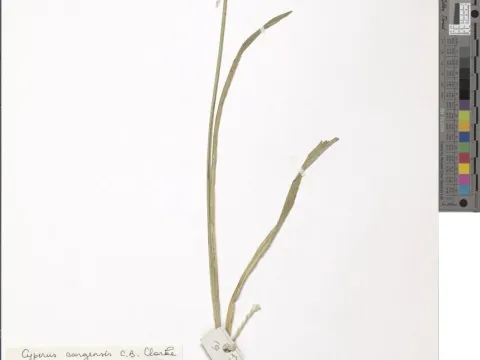
Congo papyrus
Cyperus congensis
Congo papyrus (Cyperus congensis) is a perennial herbaceous plant belonging to the Sedge family (Cyperaceae). Native to the tropical regions of Africa, this plant is specifically adapted to wet, swampy environments and riverbanks.
What the section contains
Congo papyrus
Botanically, it features sturdy, triangular stems and narrow leaves radiating from the apex or base. Its root system includes rhizomes, which allow the plant to thrive in saturated soils and withstand periods of waterlogged conditions effectively.
The climate requirements for this culture are strictly tropical; it demands warm conditions and does not possess frost tolerance. Consistent high temperatures are essential for vegetative vigor, as cold exposure quickly halts growth.
Regarding soil requirements, the culture prefers rich, moisture-retentive substrate, such as silty or clay soils. The soil should remain consistently moist, as this plant is essentially a hydrophyte that relies on water saturation to transport nutrients.
In modern agronomy and landscaping, it is utilized as an ornamental plant for water features and as a bio-filter in managed wetlands, where it helps in the stabilization of riparian soils.
The primary threats to Cyperus congensis are fungal pathogens that affect the rhizomes, especially when temperatures fall below the optimal range, leading to root rot and eventual plant decay.
Pests such as aphids and spider mites can become problematic if the plant is kept in dry, indoor environments that lack the necessary humidity required for its health.
Management of the plant requires careful observation to avoid water stagnation that could lead to anaerobic conditions, even for a water-loving species, as oxygen is still required by the roots.
Sanitation practices include the removal of dead foliage, which can harbor pests or fungal spores during the dormant or cooler seasons.
Overall, maintaining strict control over the water quality and substrate health is the most effective way to prevent pest outbreaks and disease development in a commercial or ornamental setting.