
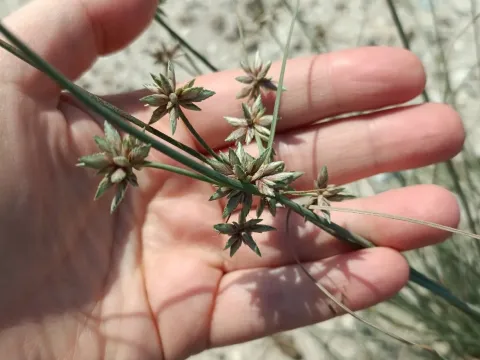
Conglomerate flatsedge
Cyperus conglomeratus
Cyperus conglomeratus, commonly known as conglomerate flatsedge, is a hardy perennial herb belonging to the Cyperaceae family. It is natively adapted to the harsh, nutrient-poor, and arid environments found throughout the deserts of North Africa, the Middle East, and Central Asia.
What the section contains
Conglomerate flatsedge
The plant possesses a highly specialized and robust root system, which allows it to thrive in shifting sands. This extensive network not only provides structural support against wind erosion but also enables the plant to access moisture far below the surface during severe droughts.
This species is a classic xerophyte, showing remarkable resilience to extreme heat and low humidity. It does not require intensive fertilization or irrigation, making it a sustainable choice for land reclamation projects in degraded desert ecosystems where water availability is minimal.
Environmental conditions conducive to its growth include well-drained sandy soils and high light intensity. Its ability to tolerate salinity and drought is its greatest biological asset, allowing it to colonize dunes that would otherwise remain barren and prone to migration.
The economic and ecological utility of Cyperus conglomeratus is centered on its role as a stabilizer. It is frequently employed in phytoremediation and sand-binding initiatives to prevent desertification, effectively protecting fertile regions from encroaching sand dunes.
While Cyperus conglomeratus is exceptionally adapted to natural stress, it remains vulnerable to overgrazing. Excessive consumption by livestock prevents the plant from storing sufficient carbohydrates in its rhizomes, eventually leading to local extinction and increased erosion.
Pests affecting this species include various specialized insects that feed on the foliage and reproductive culms. In localized micro-habitats with increased humidity, root-rotting fungi may become an issue, compromising the structural integrity of the root system.
Environmental degradation, such as soil compaction caused by off-road vehicles or heavy animal traffic, can significantly hinder the plant's ability to spread. Compaction limits oxygen availability to the roots, rendering the plants more susceptible to pathogens.
Competition from invasive plant species that are favored by changes in the local water table or nutrient input can reduce the coverage of Cyperus conglomeratus. This loss of density threatens the integrity of the dune system that the plant traditionally maintains.
Management strategies focus on sustainable grazing practices and the establishment of exclusion zones. Protecting the plant during its critical growth phases is essential to ensuring its long-term survival and continued efficacy in sand stabilization efforts.