
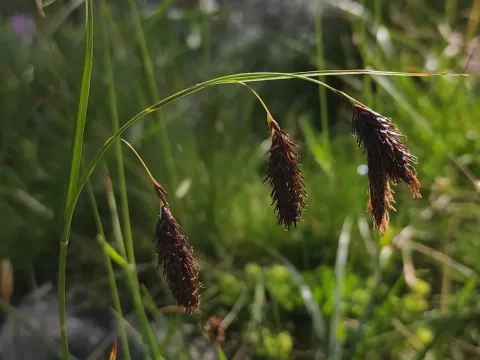
Cold sedge
Carex frigida
Cold sedge is a perennial herbaceous plant belonging to the Cyperaceae family. While not a conventional commercial crop, its biological resilience makes it a valuable subject for mountain land restoration and ecological research.
What the section contains
Cold sedge
Propagation via seeds requires a period of cold stratification to overcome physiological dormancy. In a controlled agricultural setting, sowing is best performed in late autumn to ensure germination in the following spring.
Vegetative propagation remains the most efficient method for rapid cultivation. Dividing mature clumps during the early spring allows the plant to establish its complex root system before the onset of the peak summer heat.
The plant grows in dense tussocks that play a significant role in soil stabilization. Establishing a healthy stand requires moderate spacing, typically allowing the plants to expand without competing for root space.
Successful establishment depends heavily on keeping the seedbed moist. Once established, the root system is highly effective at anchoring soil particles in challenging topographical conditions.
The species demands a cool climate consistent with its high-altitude origins. Optimal growth is achieved in environments where temperatures remain moderate and the air stays relatively cool during the night.
Moisture is the most critical requirement for the survival of cold sedge. It thrives in habitats with constant water availability, such as subalpine meadows and areas adjacent to natural drainage zones.
The soil should be nutrient-rich, preferably with an acidic to neutral pH. Although the plant loves moisture, it strictly requires a well-drained substrate to prevent waterlogging, which can damage the roots.
Cold sedge prefers full exposure to light but benefits from some shelter during the intense midday heat. In lower elevations, replicating these light conditions is essential for maintaining the plant's health.
Agronomic management involves minimal interference, focusing mainly on soil moisture maintenance. Providing adequate protection from drying winds helps preserve the structural integrity of the foliage.
Cold sedge exhibits high natural resistance to common lowland agricultural pests. However, artificial cultivation in non-native environments can predispose the plant to specific fungal pathogens.
Leaf rust is the most prevalent issue, particularly when plants are grown in overcrowded conditions or areas with stagnant air. Maintaining appropriate spacing is the primary preventative measure against this condition.
Root pathogens may occur if the substrate lacks proper drainage, leading to oxygen starvation in the roots. Proper soil structure design during the planning phase is essential for long-term health.
Pests such as certain stem-boring larvae may periodically affect the plant. Monitoring for signs of wilting or discoloration in the base of the stems allows for timely manual removal of infested parts.
The use of mild, environmentally friendly treatments is recommended, as the plant may be sensitive to heavy chemical fertilizers or harsh pesticides commonly used in intensive farming.