
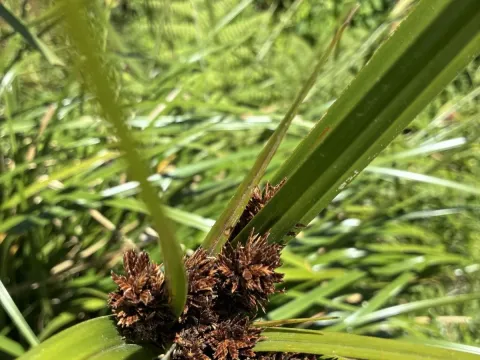
Coastal cutty grass
Cyperus ustulatus
Coastal cutty grass (Cyperus ustulatus) is a perennial sedge native to New Zealand. It belongs to the Cyperaceae family and is highly recognized for its robustness in coastal environments and wetlands.
What the section contains
Coastal cutty grass
The plant features distinctive, dark-green foliage and dense, dark inflorescences that appear as though they have been scorched, which is reflected in its scientific name. It typically grows in large, dense clumps that provide excellent structural interest.
This species thrives in full sun and requires consistently moist, fertile soil. It is notably tolerant of salt spray and maritime conditions, making it an ideal candidate for ecological restoration projects along shoreline areas.
Regarding climate, it prefers temperate environments where seasonal extremes are not excessive. It is well-adapted to withstand coastal winds, which are a common feature of its natural habitats in the North and South Islands.
Cultivation practices involve ensuring adequate soil moisture and preventing competition from invasive weed species. Once established, the plant is relatively low-maintenance, requiring only occasional clearing of dead foliage to maintain its vigorous growth habit.
Coastal cutty grass is generally resistant to most common agricultural pests and diseases. Its tough, fibrous leaf structure acts as a natural deterrent to many herbivorous insects that typically feed on softer vegetation.
The main threats to this plant are primarily environmental or management-related. For instance, prolonged periods of extreme drought can lead to significant stress and leaf browning, although the plant often recovers once moisture levels are restored.
Root rot caused by stagnant water in poorly drained soil is a potential concern in heavy clay landscapes. Ensuring a porous soil structure is essential for maintaining a healthy and extensive root system.
While foliage diseases are rare, overcrowding can limit airflow and potentially lead to mild fungal growth. Maintaining appropriate planting distances is recommended to ensure the long-term health of the clump.
Small mammals and rodents may occasionally disturb the base of the plant during the winter months. Monitoring the area and maintaining a clean planting site can help minimize these risks and ensure the plant remains in top condition.