
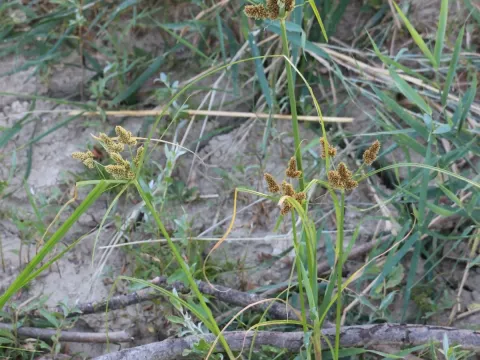
Clustered flatsedge
Cyperus glomeratus
Clustered flatsedge (Cyperus glomeratus) is a perennial herbaceous plant belonging to the Cyperaceae family. It is a highly moisture-dependent species that thrives in riparian zones, wetlands, and areas with poorly drained, saturated soil conditions.
What the section contains
Clustered flatsedge
The plant features a robust root system and distinct inflorescences characterized by clustered spikelets. These biological traits allow the species to persist in environments where water tables are constantly high, providing a competitive advantage over dry-land vegetation.
Successful cultivation requires soil that maintains high moisture levels throughout the growing season. The species is highly tolerant to inundation and can survive periodic flooding, which is common in alluvial plains and river floodplains.
Climatically, the plant prefers warm environments with ample sunlight. Exposure to direct sun is critical for the development of healthy biomass and the successful maturation of seeds, especially when grown in managed agricultural or restoration settings.
In terms of agricultural and environmental utility, Cyperus glomeratus is primarily used for soil erosion control and water quality improvement through phytoremediation. It also serves as a secondary forage source in specific geographic regions where specialized wetland management is practiced.