
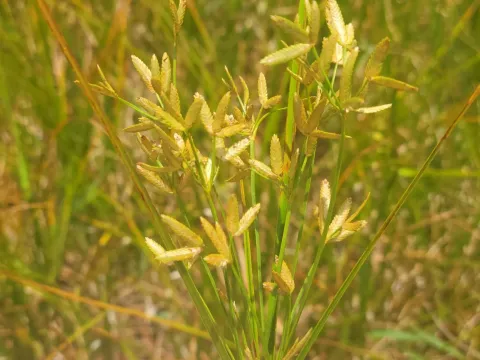
Leconte's flatsedge
Cyperus lecontei
Leconte's flatsedge (Cyperus lecontei) is a member of the Cyperaceae family, often found in marshy or wet habitats where it can thrive in nutrient-rich substrates.
What the section contains
Leconte's flatsedge
Sowing should be timed for the spring when the soil has reached a stable temperature, allowing for rapid germination and establishment of the root system.
Seeds are typically sown in prepared seedbeds with optimal moisture levels, ensuring they are not buried too deeply to preserve their viability.
The cultural practice involves creating uniform rows to allow for mechanized maintenance, which is essential for large-scale agricultural production.
Proper density management is crucial to ensure that the plant stand is thick enough to suppress weeds while allowing for adequate aeration between plants.
The crop requires moist, well-draining soil with high organic content to achieve maximum biomass production during the growth season.
Temperature plays a vital role in development; Cyperus lecontei favors warm environments and requires high cumulative temperatures to progress through its phenological stages.
Soil pH should be monitored frequently, with an ideal range being slightly acidic to neutral to ensure the availability of essential macro-nutrients.
Strategic fertilization, particularly with nitrogen and phosphorus, significantly boosts the yield and improves the overall quality of the harvested crop.
Regular irrigation is necessary in regions with erratic rainfall patterns to prevent water stress, which can lead to stunted growth and reduced yields.
Common threats to the crop include various fungal pathogens that can develop during periods of high humidity and poor field drainage.
Pest management is focused on controlling insects that target the rhizomes, which can be protected by preventative treatments applied during the planting phase.
- Monitor fields weekly for signs of leaf spot diseases.
- Implement crop rotation to break the cycle of soil-borne pests.
- Use integrated pest management to reduce reliance on chemical inputs.
Maintaining clean farm equipment and controlling weeds surrounding the fields helps prevent the spread of diseases and insect populations.
Early identification of pest infestations is key to successful treatment, often involving the selective use of herbicides or insecticides.
Harvesting strategies for Cyperus lecontei are tailored to the desired end use, whether for forage, biomass, or decorative applications.
The timing of the harvest is critical, as nutrient concentrations change throughout the plant's growth cycle, impacting the quality of the raw material.
Mechanical harvesting equipment must be adjusted to minimize damage to the rhizomes if they are part of the intended harvest product.
Post-harvest handling requires quick cooling or drying to minimize losses from heat and microbial activity, ensuring the integrity of the crop.
Storage facilities must be dry and well-ventilated to maintain the quality of the harvested produce over long durations before processing.