
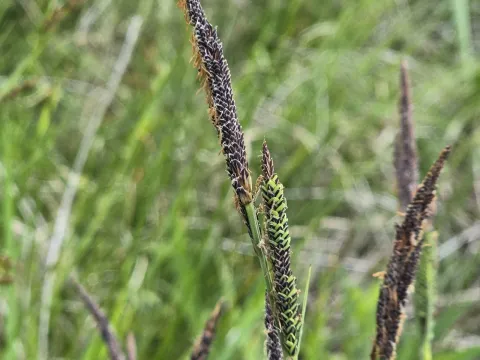
Common sedge
Carex nigra
Carex nigra, commonly known as common sedge, is a perennial herbaceous plant belonging to the Cyperaceae family. It is a rhizomatous species that forms dense mats, which play a crucial role in stabilizing wetland substrates and preventing erosion in riparian zones.
What the section contains
Common sedge
The plant is native to temperate and subarctic regions of Europe and North America. It is highly adapted to moist environments, including wet meadows, fens, and the edges of freshwater bodies, where it can withstand prolonged waterlogging.
Regarding climate, common sedge thrives in cool and humid conditions. It is frost-tolerant and well-adapted to the seasonal hydrological variations characteristic of boggy landscapes, which is essential for its persistence in diverse ecosystems.
The soil requirements are specific: the species prefers acidic to neutral soils with high moisture content. It thrives in organic-rich substrates like peat or silt but can tolerate a range of nutrient levels, provided that moisture is not the limiting factor for growth.
Its agricultural utility is primarily linked to extensive grazing and hay production in wetlands where high-yield crops cannot survive. It provides significant biomass that, when harvested at the right time, serves as supplementary forage for livestock in remote areas.
Common sedge is generally robust, but it can be susceptible to fungal infections such as smut diseases, which specifically target the inflorescences. These pathogens can significantly reduce seed viability and overall stand density.
Insects like leaf-mining beetles can cause cosmetic and physiological damage to the foliage. While usually not lethal, severe infestations can reduce the photosynthetic capacity of the plant during the critical growth phases in late spring.
Aphids are another potential pest, particularly when the sedge grows in sheltered, damp areas where air circulation is restricted. They cluster on the stems and suck sap, often attracting secondary fungal pathogens through honeydew secretion.
Root rot, caused by various soil-borne pathogens, can occur in stagnant water conditions where oxygen levels in the substrate drop excessively. Proper drainage management is key to preventing these types of losses in managed meadow systems.
Integrated pest management involves monitoring for early signs of discoloration or wilting. Maintaining a balanced ecosystem with natural predators is the most sustainable approach to managing pest populations within these native plant communities.