
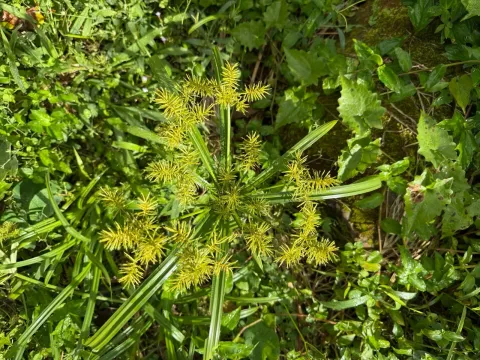
Fragrant flatsedge
Cyperus odoratus
Fragrant flatsedge (Cyperus odoratus) is a herbaceous plant within the Cyperaceae family. It is recognized for its adaptation to wetland environments, functioning as a perennial or annual depending on the specific climatic conditions of its habitat.
What the section contains
Fragrant flatsedge
The native distribution covers large areas of North and South America, as well as parts of Africa. It thrives in marshes, muddy banks of ponds, and along river streams, where moisture levels remain consistently high throughout the growing season.
Botanically, the species is defined by its triangular stems and complex, umbrella-like inflorescences. The rhizomes are noted for their aromatic properties, which have historically been of interest in local traditional practices and, occasionally, in small-scale oil extraction.
Cultivation requirements necessitate rich, organic, and moisture-retentive soils. Unlike many field crops, this plant requires constant hydration, making it an excellent candidate for riparian buffer zones or managed wetland agricultural systems.
Thermal stability is vital, as the plant is sensitive to frost damage. It requires long-day conditions to maximize photosynthesis and ensure the development of robust root structures, which are critical for the plant's survival and secondary metabolite production.
The economic potential is largely niche, centered around the harvesting of rhizomes for aromatic extracts. Research into its biomass potential for sustainable bio-materials is ongoing, though it is not a primary food crop in most industrial markets.
The primary threats include infestation by aphids and various species of spider mites during periods of high heat and lower relative humidity. Fungal pathogens, particularly those causing root rot, become a significant issue if the soil lacks sufficient oxygenation or if stagnant water conditions favor anaerobic microbial activity.