
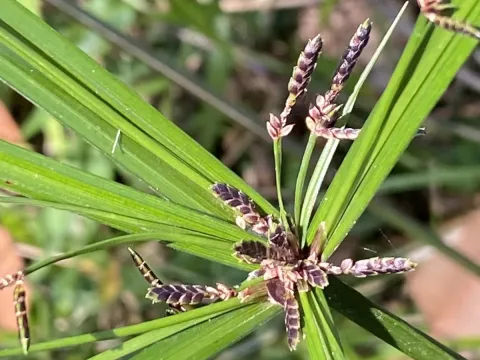
Four-leaf flatsedge
Cyperus tetraphyllus
Sowing or propagation of Cyperus tetraphyllus is best achieved during the spring season when temperatures reach a stable 18–20 degrees Celsius. Early spring provides the necessary warmth for rapid root development.
What the section contains
Four-leaf flatsedge
For seed propagation, utilize a moisture-retentive substrate such as a peat-sand mix. Keep the surface moist and ensure high ambient humidity to facilitate germination, as the seeds require sufficient light to sprout effectively.
Vegetative propagation via rootstock division is the most efficient method for rapid production. Divide mature clumps during the dormant or early growth phase and replant segments into aquatic pots or directly into saturated soil beds.
Ensure that newly planted divisions are shielded from intense, direct sunlight for the first few weeks to prevent dehydration. Gradually increase light exposure as the root system begins to establish itself in the new environment.
Proper spacing is crucial when planting to ensure adequate airflow and light penetration for each rosette. Avoid crowding, which can lead to increased humidity levels conducive to fungal growth between the stems.
Cyperus tetraphyllus belongs to the Cyperaceae family. It is a perennial herbaceous plant naturally adapted to wetlands, stream banks, and marshes, thriving in conditions that would cause root rot in most other crops.
The plant has a high demand for water. It thrives when its root system is fully saturated or submerged in shallow water, generally up to 10–15 centimeters deep, making it an excellent candidate for water gardens and pond management.
Light requirements are significant for maintaining the architectural integrity of the plant. Bright, indirect light is preferred, as this promotes compact, lush foliage growth and helps maintain the characteristic four-leaf structure.
Soil quality should be nutrient-rich with high organic content. Loamy soils that are capable of holding moisture are ideal for cultivation; conversely, fast-draining, sandy soils are unsuitable without significant water supplementation.
Temperature sensitivity is a limiting factor for this species. It prefers a warm environment ranging between 15 and 25 degrees Celsius. In colder climates, protective measures or indoor wintering are required to prevent frost damage to the roots.
Spider mites and mealybugs are the primary pests that affect the foliage, especially when the plant is kept in environments with low air humidity. Regular misting helps to discourage these infestations effectively.
Fungal rots are the most common pathological threats, often caused by stagnant water or poor air circulation. Removing decaying plant matter and ensuring the water in the pond or container remains fresh can mitigate these issues.
Nutrient imbalances or poor water quality can result in chlorosis, which causes yellowing of the leaves. Maintaining a balanced level of aquatic fertilizer is necessary to ensure healthy growth without causing eutrophication in the water feature.
Physical damage during handling can provide entry points for pathogens. Careful maintenance and the use of disinfected tools during division and pruning significantly reduce the risk of secondary infections.
Monitoring for any signs of leaf spotting is essential. Prompt removal and destruction of affected parts of the plant are recommended to contain the spread of infections throughout the cultivation area.