
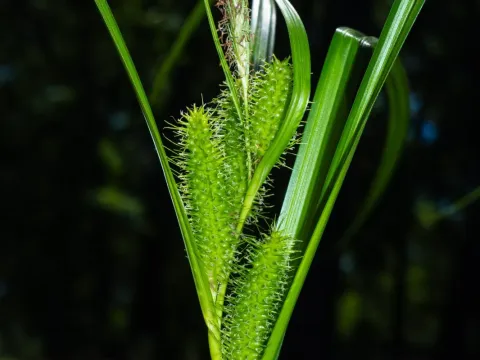
Frank's sedge
Carex frankii
Frank's sedge, scientifically known as Carex frankii, is a perennial herbaceous plant belonging to the Cyperaceae family. It is native to North America, where it thrives in moist environments such as alluvial woods, marshes, and riverbanks.
What the section contains
Frank's sedge
The cultivation of this species requires sites with consistently high soil moisture levels. It performs exceptionally well in heavy clay soils that are capable of holding water, which supports its natural metabolic processes in wetland conditions.
Regarding light requirements, the plant is primarily a sun-loving species but can tolerate partial shade. Its morphological structure, characterized by dense tufts, allows it to compete effectively with other wetland vegetation.
Agronomic management is focused on site selection rather than intensive cultivation. Ensuring stable water tables is the most critical factor for successful stand development and long-term sustainability of the planting.
Economic and environmental applications of Frank's sedge include its use in phytoremediation projects, bio-engineering for erosion control on canal banks, and sustainable landscaping of rain gardens or stormwater management areas.
Carex frankii is generally considered a robust species with minimal susceptibility to significant agricultural diseases. However, in poorly ventilated, overly dense colonies, rust fungi may occasionally manifest.
Insect pests are rarely a limiting factor for this species. Occasional infestations of aphids may occur during prolonged dry spells if the soil moisture levels drop below the optimal range for the plant's health.
Preventive measures primarily involve maintaining optimal hydrological conditions and avoiding excessive crowding of plants, which helps to preserve natural vigor and disease resistance.
In cases where disease outbreaks occur, physical removal of symptomatic foliage is recommended rather than the application of heavy chemical treatments, which is consistent with the plant's role in environmental management.
Integrated management plans for Frank's sedge focus on long-term ecological balance, ensuring that the plant population remains healthy and functional within its designated wetland habitat.