
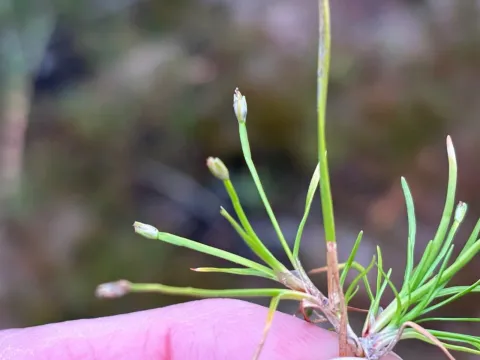
Floating club-rush
Isolepis fluitans
Floating club-rush (Isolepis fluitans) is primarily propagated through vegetative division of the root clumps or stem fragments. The ideal time for planting is late spring when water temperatures stabilize and reach at least 15 degrees Celsius.
What the section contains
Floating club-rush
For successful establishment, plants should be placed into a substrate consisting of sand, silt, and specialized aquatic soil. Planting depth is crucial, ranging from 10 to 50 centimeters to ensure the plant receives sufficient light for photosynthesis.
When cultivated in artificial water bodies or tanks, plants should be arranged in small clusters spaced about 20-30 centimeters apart. This spacing allows for adequate growth room while helping the plants establish a dense, healthy mat.
Although it can spread naturally, in commercial or landscaping settings, manual planting is preferred to ensure a uniform appearance. After placement, the plants quickly anchor themselves to the bottom substrate using their fibrous root system.
Propagation from seed is rarely utilized in practical agriculture due to low germination rates under typical pond conditions. Therefore, vegetative cuttings remain the gold standard for rapid multiplication of this species.
Belonging to the Cyperaceae family, Isolepis fluitans is a resilient perennial plant that thrives in freshwater environments. It prefers still or slow-moving waters where organic matter is readily available in the sediment.
The plant requires high light intensity for optimal growth, though it can tolerate partial shade. Full sun exposure promotes more vibrant green coloration and faster stem elongation, which is desirable for ornamental use.
Water quality parameters should be maintained within a neutral pH range of 6.0 to 7.5. Consistent water chemistry is essential to prevent physiological stress, which can lead to thinning of the stems and reduced growth rates.
The ideal temperature range for active growth is between 18 and 25 degrees Celsius. While it can survive lower temperatures, growth significantly slows down during winter months as the plant enters a semi-dormant state.
Adequate water circulation is beneficial to provide a constant supply of nutrients to the submerged parts of the plant. Stagnant water can lead to nutrient depletion and potential buildup of metabolic waste in the root zone.
The yield of Isolepis fluitans is typically measured in terms of biomass production, which is highly significant for its application in phytoremediation and biofiltration of wastewater systems.
In highly nutritious environments with high light availability, the plant can double its total biomass in under a month. This rapid growth rate makes it an excellent candidate for nutrient extraction projects.
Beyond biofiltration, the plant is valued in the aquarium industry as a habitat for small fish and invertebrates. It provides essential shelter and oxygenation, enhancing the biological balance of the captive ecosystem.
Productivity can be managed through regular pruning, which removes senescent stems and encourages the development of fresh, vibrant growth. This practice maintains the health and aesthetic appeal of the pond plantings.
Maximizing biomass production requires careful management of nitrogen and phosphorus levels in the water. Excessive nutrient loading must be balanced against light availability to prevent the dominance of competing algae species.
The most common disease threat involves fungal infections, particularly those caused by stagnant, oxygen-poor water. Symptoms include browning and softening of the stems, requiring immediate removal of affected plant material.
Pests such as aquatic snails can quickly defoliate the plant, especially in high-density populations. Implementing biological controls or manual removal is recommended to keep pest levels below an economically damaging threshold.
Competition from invasive algae poses a significant risk to the plant's survival. Algae can rapidly cover the surface, starving the club-rush of light and leading to rapid decline and eventual death of the submerged mats.
Chemical stress, such as the introduction of chlorine or excessive heavy metals, causes immediate tissue degradation. Regular monitoring of the water environment is vital to ensure no toxic substances are present.
Anaerobic conditions in the bottom sediment are detrimental to the roots. Proper aeration of the water column and soil substrate is a key preventive measure to ensure the long-term health and vitality of the colony.