
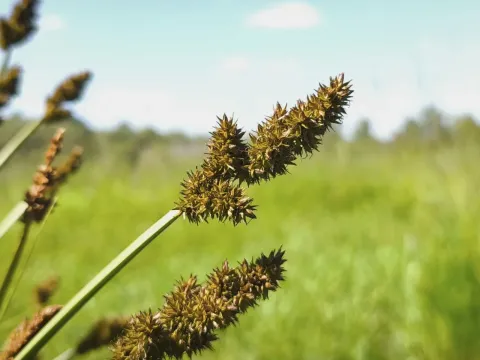
Fox sedge
Carex vulpina
Fox sedge (Carex vulpina) is a perennial wetland plant belonging to the Cyperaceae family. It is widely distributed across Europe and temperate Asia, thriving in marshes, riverbanks, and floodplains where other grasses struggle to survive.
What the section contains
Fox sedge
The plant is characterized by its dense, tufted growth habit and robust root system, which helps it anchor in waterlogged or heavy soils. It is highly adaptable to a variety of soil types as long as high moisture availability is maintained throughout the growing season.
In terms of climate requirements, Carex vulpina is cold-hardy and well-adapted to the temperate climate zone. It prefers sunny locations but shows remarkable tolerance to partial shade in swampy environments.
Botanically, it features triangular stems and sharp-edged leaves. These physical characteristics contribute to its durability and resistance to damage from flowing water, making it a preferred species for stream bank stabilization and erosion control.
Agricultural management is relatively simple, as the plant spreads naturally through seeds and vegetative division. It does not typically require intensive fertilization, making it a low-input option for managing wet, non-arable lands.
The primary use of Fox sedge in agriculture is as a component of wild hay harvested from natural meadows. While not a high-protein forage, it provides necessary bulk for livestock feed, especially when harvested at an early maturity stage.
The biomass productivity is significant in undisturbed wet areas. However, as the plant matures, the leaves become siliceous and coarse, reducing their digestibility for ruminants significantly. Therefore, timely harvesting is crucial for maintaining forage quality.
Beyond animal feed, Carex vulpina is increasingly utilized in ecological restoration and bioremediation. Its efficiency in absorbing excess nutrients from water makes it an ideal plant for constructed wetlands and water filtration systems.
For industrial applications, the biomass of Fox sedge is being researched as a potential feedstock for renewable energy production, specifically for anaerobic digestion or combustion as solid fuel, depending on regional availability.
Optimal yield management involves a single or double cut per season. Harvesting before the seeds fully mature helps prevent the plant from becoming too invasive while ensuring the leaves remain manageable for processing equipment.
Fox sedge is generally robust and resilient, exhibiting strong natural defenses against many common crop diseases. However, in poorly managed or extremely dense stands, fungal diseases such as leaf rust can occur.
Pest pressure is usually low, though occasional outbreaks of aphids or specific leaf-feeding beetles may occur during unusually dry summers. These pests rarely cause significant economic damage to wild or semi-cultivated stands.
The most severe threat to this crop is habitat drying. As a hygrophilous plant, a prolonged drop in the water table causes physiological stress, leading to stunted growth and susceptibility to secondary infestations.
In cases where Fox sedge acts as a weed in drainage channels or managed meadows, control is achieved through deep tillage and effective soil drainage. Because the plant relies on wet conditions, lowering the water table is the most effective management strategy.
Regular field inspection is recommended to identify early signs of nutrient deficiency or water stress. Maintaining a balanced ecosystem prevents the rapid spread of pathogens and supports healthy plant development.