
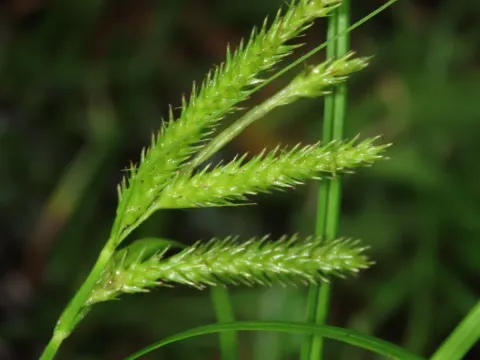
Fox-tail sedge
Carex alopecuroides
Fox-tail sedge (Carex alopecuroides) is a perennial herbaceous plant belonging to the Cyperaceae family. It is recognized for its dense, tufted growth habit and its ability to thrive in wetland environments, playing a key role in ecological stabilization of moist habitats across Eurasia.
What the section contains
Fox-tail sedge
The plant is naturally adapted to regions with temperate climates, where it colonizes wet meadows, lake shores, and floodplains. It is highly resilient, capable of enduring seasonal inundation, which makes it a valuable species for managing land that is unsuitable for traditional crops.
Regarding soil requirements, Carex alopecuroides favors nutrient-rich, moist-to-wet soils, including peat and heavy clay loams. While it prefers full sun, it exhibits moderate shade tolerance, allowing it to adapt to diverse landscape conditions and agricultural sites.
Agrotechnical management primarily focuses on water regulation. Maintaining soil moisture at an optimal level throughout the growing season is crucial for maximizing biomass production. The plant is relatively low-maintenance, requiring minimal intervention once established in suitable locations.
Economically, this sedge is utilized for forage in early developmental stages, soil erosion control, and wetland restoration. Its rapid growth rate after mowing provides an excellent source of biomass for sustainable land-use projects and environmental remediation efforts.
The primary threats to Carex alopecuroides include fungal infections such as rusts and leaf spots, which thrive in environments with poor air circulation. Proper planting density is essential to minimize humidity-related disease outbreaks in dense vegetation stands.
Insects, particularly those that feed on the succulent stems and leaves, represent another common threat to the crop's vitality. Regular monitoring and the implementation of biological control methods are standard practices for maintaining the health and productivity of the sedge plantations.