
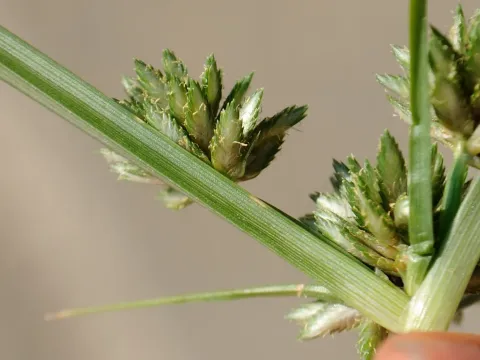
Cyperus nipponicus
Cyperus nipponicus
Cyperus nipponicus is a herbaceous perennial plant belonging to the Sedge family (Cyperaceae). It is typically found in habitats characterized by high moisture levels, such as marshlands and riverbanks.
What the section contains
Cyperus nipponicus
Botanically, the plant is distinguished by its upright, triangular stems and dense tufts of linear leaves, which provide significant vegetative mass during the growing season.
Regarding cultivation, this species demands consistently saturated soil conditions and high light exposure. It thrives in loamy or clay-heavy soils that retain water well, making it suitable for wet cultivation areas.
The climate requirements include a warm growing period, as the plant is sensitive to severe frosts. It prefers moderate to subtropical temperatures to reach its full vegetative potential.
In terms of economic value, it is primarily viewed as a niche plant for landscaping, erosion control, and potential use in constructed wetlands for water filtration purposes.
The main threats to Cyperus nipponicus include fungal infections such as rust and leaf spots, which thrive when humidity is excessively high and air circulation is poor.
Root rot is another significant concern, occurring when soil drainage becomes completely stagnant, leading to oxygen deprivation for the plant's underground organs.
Common pests like aphids and certain species of mites can infest the foliage, especially during drier spells when the plant's metabolic resistance may slightly drop.
Environmental stress, such as sudden changes in water levels or water chemistry, can weaken the plant, making it more susceptible to opportunistic pathogens.
Effective management includes regular monitoring of soil moisture levels, removing decaying plant debris, and applying targeted organic treatments if pest populations exceed economic thresholds.