
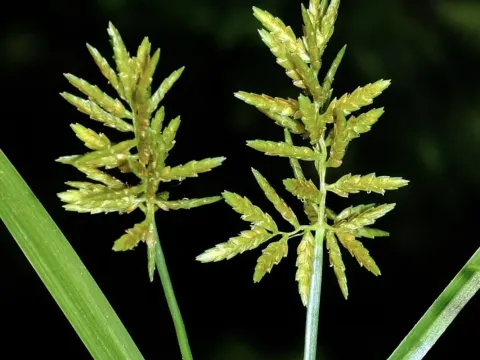
Cyperus microiria
Cyperus microiria
Cyperus microiria is an annual herbaceous plant species belonging to the Cyperaceae family. In agronomic terms, it is recognized for its rapid growth cycle and high reproductive rate, often colonizing disturbed agricultural lands.
What the section contains
Cyperus microiria
The germination process is triggered by rising soil temperatures in late spring. Optimal germination occurs when soil conditions are warm and moist, allowing the seeds to establish themselves quickly.
Seeds require exposure to light to break dormancy effectively, which explains why this species thrives in cultivated fields where soil disturbance brings seeds to the surface.
The plant completes its life cycle within a single season, producing a large number of seeds that contribute to the persistent seed bank in agricultural soils.
Agricultural management requires early intervention, as the speed at which this plant reaches maturity makes late-season control ineffective.
Cyperus microiria is highly dependent on moisture, typically found in irrigated fields, marshes, and areas with poor drainage where soil remains constantly damp.
It favors light-textured soils such as sandy or silty loams. These soil types allow for the rapid spread of the plant's fibrous root system, enabling it to outcompete crops for nutrients.
Light intensity is a limiting factor for this species; it requires full sun exposure to flourish and cannot survive in heavily shaded environments created by dense crop canopies.
The plant is thermophilic, showing increased growth rates during hot summer months. It is less competitive in cooler climates, where its metabolic activity slows down.
Drainage management is the most effective cultural practice to reduce the suitability of an area for Cyperus microiria colonization, as it directly impacts its water requirements.
The control of this sedge species is challenging because it often shows resistance to standard post-emergence herbicides, requiring specialized chemical strategies.
Fungal pathogens can affect the plant during periods of high humidity, leading to leaf spots or stem decay, though these rarely eradicate a localized infestation.
Various insects, particularly those that feed on sedges, can cause damage to the inflorescences, but they typically do not provide sufficient natural biological control.
It is important to note that Cyperus microiria can serve as a reservoir for viruses and pathogens that negatively affect commercial grain crops.
Integrated weed management, combining crop rotation and precise herbicide application timing, is essential to mitigate the impact of this species on overall farm productivity.
In cases where Cyperus microiria is present in harvested crops, farmers must adjust harvest machinery to prevent the spread of its seeds to non-infested fields.
Cleaning equipment thoroughly after working in areas where this species is prevalent is a mandatory procedure for maintaining field hygiene.
Early harvesting of the primary crop can sometimes prevent the sedge from reaching full maturity and dispersing its seeds across the harvested field.
If the field is heavily infested, post-harvest tilling may be required to bury seeds deeply, although this may only provide temporary relief for the following season.
Effective management during the harvest phase is critical to limit the long-term economic impact of this persistent weed on future agricultural operations.